Last updated November 21, 2026
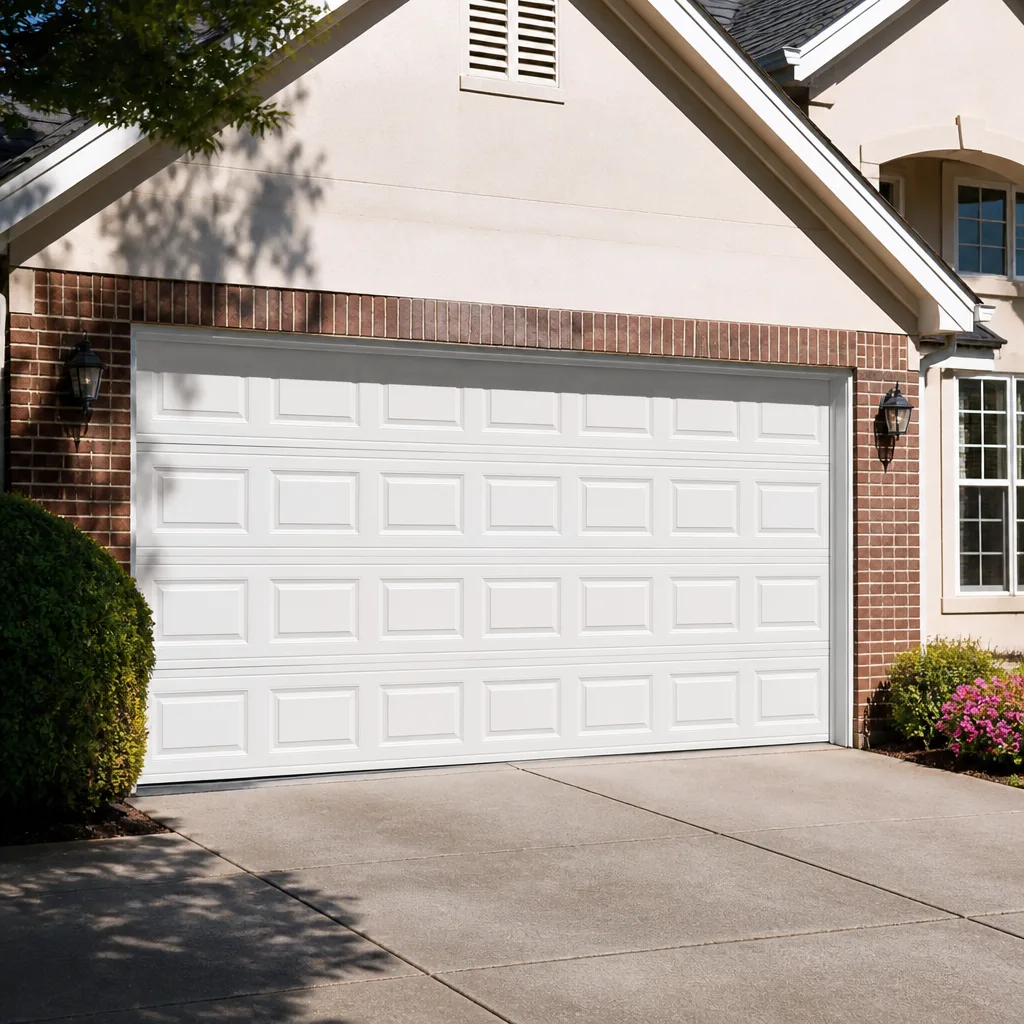 Raised-panel steel
 Carriage house
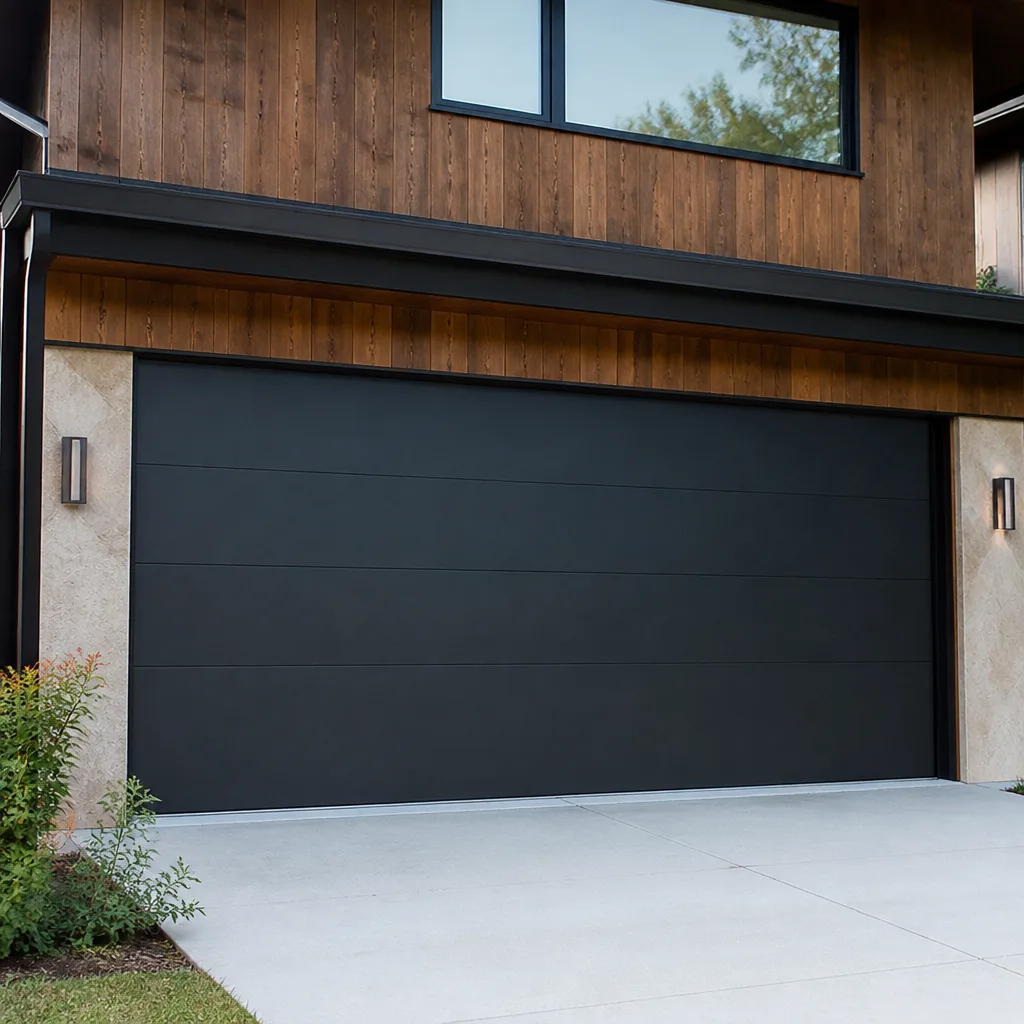 Modern flush
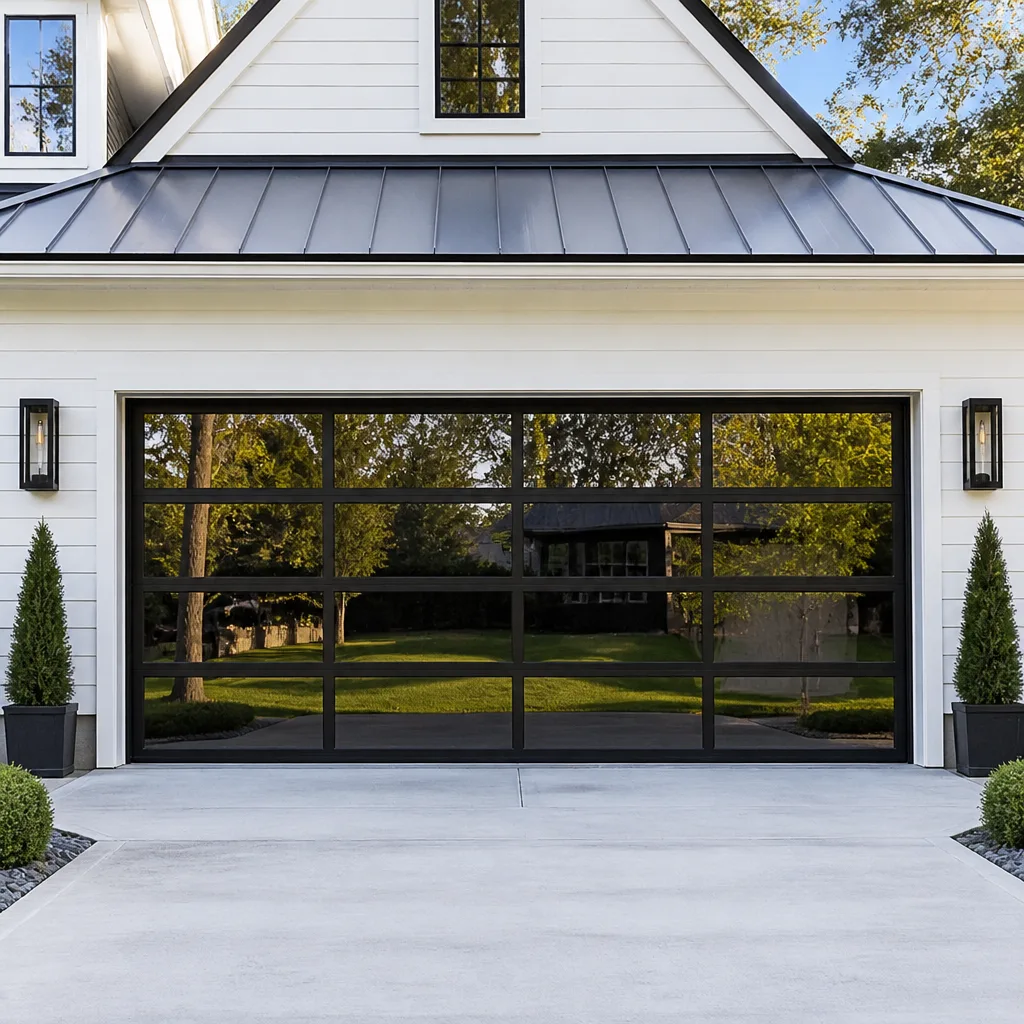 Full-view glass
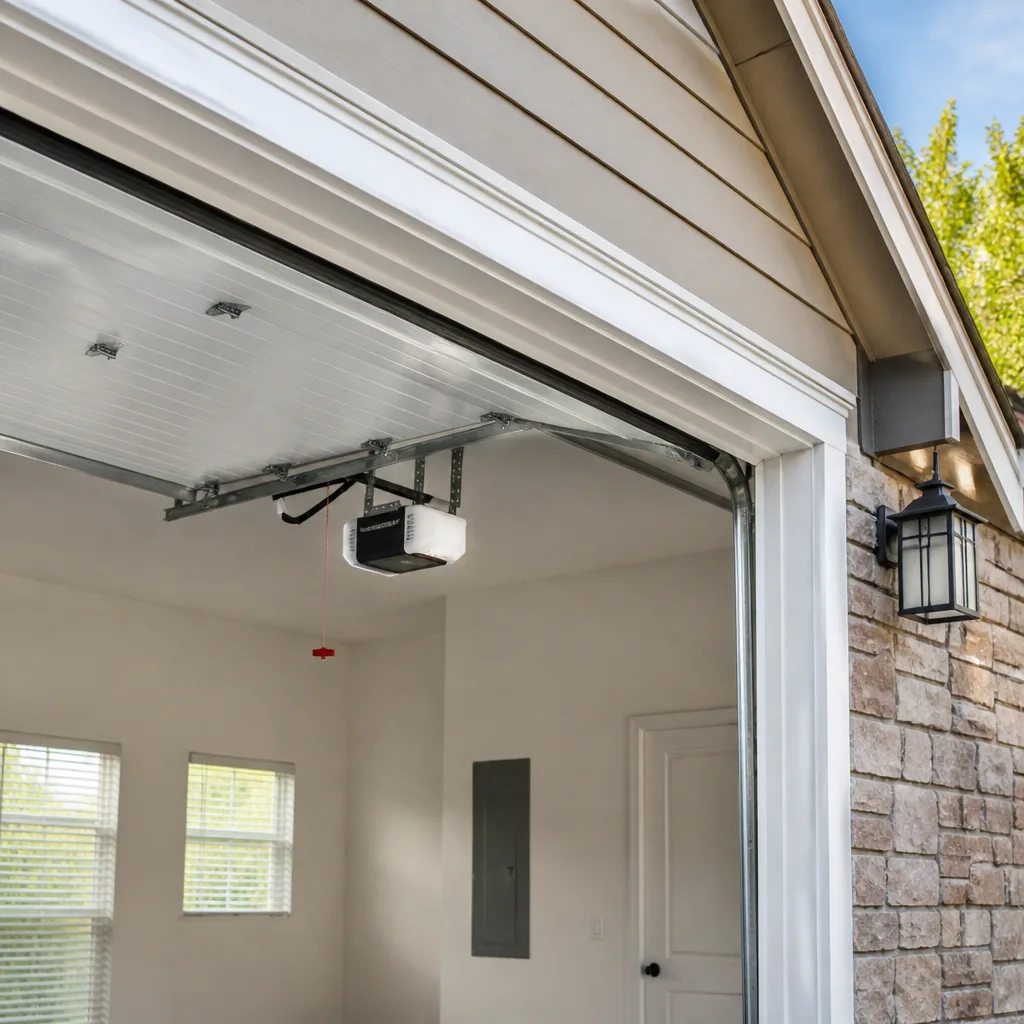 LiftMaster openers
 Chamberlain openers
Full 25-point door and opener safety check with every visit - springs, cables, rollers, tracks, and your LiftMaster or Chamberlain opener included
You get a price before we start. It does not change when the pro arrives.
Get your free estimateSeasonal Garage Door Care for Jamaica: Year-Round Homeowner’s Guide
Spring isn’t when garage door springs fail most often. It’s late February, when Jamaica gets its first 45-degree day after two months of sub-freezing cycles and the steel has contracted and expanded dozens of times. The metal fatigues quietly all winter, then the thaw arrives and something lets go. Most homeowners here treat their door as a year-round constant, but it lives through four distinct stress periods every year, and the week between them is when small problems become expensive ones. This guide maps the tasks to Jamaica’s actual calendar, so you know what to check in February, what to watch in August, and what matters most before the first cold snap.
Quick Answer
Garage door care in Jamaica runs on a climate calendar, not a generic four-season checklist. Check and lubricate moving parts in late fall before temperatures drop below 20°F, inspect seals and panels after the February freeze-thaw cycle, watch for panel swelling and track misalignment during the humid stretch in May and June, and clean and re-treat sun-facing doors in August when UV exposure peaks. Two professional tune-ups a year, timed to those transitions, catch most failures before they happen.
Styles & brands we work with
- Raised-panel steel
- Carriage house
- Modern flush
- Full-view glass
- LiftMaster openers
- Chamberlain openers
Table of Contents
- Why Jamaica’s Climate Calendar Matters More Than a Generic Checklist
- February-March: The Freeze-Thaw Window That Breaks Springs
- May-June: Humidity, Swollen Panels, and Tracks That Drift
- August: What UV Exposure Does to South-Facing Doors
- October-November: The Pre-Winter Prep Checklist
- Salt and Sand: What NYC Street Treatment Does to Your Tracks
- Month-by-Month Maintenance Calendar for Jamaica Homeowners
- Your Opener Has a Seasonal Cycle Too
Why Jamaica’s Climate Calendar Matters More Than a Generic Checklist
Most seasonal garage door advice is written for a mild, uniform climate, and it falls apart in Jamaica. A door here goes through hard freezes, humid summer stretches, and strong summer sun, sometimes all in the same twelve months. Each of those puts pressure on a different part of the system. Springs carry load differently in cold steel. Wood panels absorb moisture and change shape. Rubber seals dry out and crack under UV. Steel tracks collect grit from treated streets.
A generic “lubricate twice a year” schedule doesn’t account for when those pressures actually hit. The result is that homeowners in Jamaica often service a door in the wrong month and miss the exact window when a small fix would have prevented a spring failure, a bent track, or a rotted panel edge.
This guide breaks the year into four stress periods and ties specific tasks to each one. The sections below cover what’s happening mechanically, what to check, and when to bring in a technician. If your goal is simply to keep the door working smoothly, you can do most of it yourself. For anything involving springs, cables, or the counterbalance system, we’ll say clearly when to stop and call someone. That’s why we offer garage door repair as a core service here and frequently see these transition-period failures firsthand.
One more thing worth saying up front: this schedule is about prevention, not a promise that nothing will break. A well-maintained door still fails eventually. The point is to catch it before it fails at the worst possible time, like the morning you’re already late.
February-March: The Freeze-Thaw Window That Breaks Springs
Torsion springs fail most often when the weather is changing, not when it’s coldest. In Jamaica and across Queens, late February is when the first genuinely mild days arrive after two months of sub-freezing nights. Steel that’s been contracting and expanding through every cold cycle has been accumulating fatigue, and the thaw is when it gives.
Here’s the mechanism in plain terms. A torsion spring is under constant tension and holds the entire weight of the door. Cold makes steel slightly more brittle and changes the tension it can hold. Every freeze-thaw cycle works the metal a little. By the time the thaw comes, the spring that’s been loaded all winter is at its weakest point, and the door’s first normal open pulls the last bit of life out of it.
What to Check in the February-March Window
- Watch for a door that feels heavier than usual. If you have to lift it manually and it feels stiff or difficult, the spring may already be weakening. Test this only on a door you can lift safely and never while standing under it.
- Listen for a loud snap from inside the garage. A broken spring often sounds like a gunshot. If you hear it, don’t try to open the door. Call for service. The spring is a high-tension component and should only be handled by a trained technician.
- Inspect the bottom seal after every thaw. Ice and meltwater work under the seal and pull it loose. A bottom seal that’s torn or hanging allows water, cold air, and pests in.
- Look at the spring itself. A visible gap in the coil means the spring has broken. Don’t touch it or attempt any adjustment. This is a specialist job.
- Check the door’s balance. Disconnect the opener and lift the door halfway. It should stay in place. If it drops or rises on its own, the springs need a professional look.
Spring replacement is one of the most hazardous garage door repairs there is, and we treat it as a dedicated service for that reason. If your door fails during the freeze-thaw window, emergency garage door service matters, because a stuck door can trap your car or leave your garage open. We handle emergency situations beyond standard scheduling. We work on the major opener and door brands, including LiftMaster, Chamberlain, Genie, and Clopay, so if your system is one of the widely installed setups in Jamaica, we’ll know it on arrival rather than diagnosing from scratch.
May-June: Humidity, Swollen Panels, and Tracks That Drift
By late spring, Jamaica shifts from cold and dry to warm and humid, and wood garage doors feel it immediately. Wood absorbs moisture from the air. As relative humidity climbs, panels swell slightly. That swelling is small, but a garage door is a precision system with tight clearances, and even a few millimeters of expansion can push panels against the tracks.
The result shows up as a door that suddenly rubs, screeches, or binds on one side. Homeowners often assume the opener is failing when the real problem is swollen wood pushing the door out of alignment. If it happens during a humid stretch in Jamaica, that’s the first thing to check.
What Humidity Does to a Garage Door
- Wood panels swell. Panels expand across their width, and the door can start to bind against the track on one or both sides.
- Tracks can drift out of alignment. The bracket that holds the track to the wall shifts slightly as the structure around it moves with moisture.
- Paint and finish are stressed. Panels that swell and shrink can crack paint at the seams, opening wood up to more moisture next season.
- Weatherstripping loses its grip. Rubber seals get softer and pull away from their channels more easily in humid conditions.
What you can do yourself in this window is simple. Check that the door moves evenly through its full travel without rubbing. Look at the gap between the door edge and the track on both sides. If it’s uneven, or if the door is visibly scraping, it needs to be looked at before the track bends permanently.
If you’re not sure whether it’s alignment or an opener problem, that’s a good time to call. Distinguishing a track issue from a drive system issue is part of what garage door opener repair covers, and we can usually tell within a few minutes what’s actually causing the binding.
August: What UV Exposure Does to South-Facing Doors
August is the month most homeowners ignore, and for good reason: nothing has visibly failed yet. But the sun has been doing quiet damage all summer, especially on doors that face south. UV breaks down paint, finishes, and rubber over time, and a door that faces the strongest sun gets the most of it.
On a south-facing garage door in Jamaica, paint can chalk, fade, and crack in the summer heat. Weatherstripping along the sides and top becomes brittle and starts to crack. Once the rubber cracks, it stops sealing properly, which lets water, cold air, and pests in. The damage is cumulative. A sunny August now means a rotted seal and peeling paint by the following spring.
August Inspection Checklist
- Look at the paint. Chalky, dull, or cracking paint on the sun-facing side is early UV damage. Touch up or re-paint before the wood underneath takes on moisture.
- Run your hand along the weatherstripping. It should feel supple. If it’s hard, cracked, or pulling away, plan to replace it before the cold season.
- Check the bottom seal. It takes the most sun exposure when the door is closed and dries out faster than the side seals.
- Inspect the panels themselves. UV can cause wood panels to dry and crack along the grain, especially on doors that haven’t been refinished recently.
- Notice the door’s finish color. Fading on one side only confirms the sun exposure is uneven, and that’s the side that needs attention first.
Re-painting and re-sealing is straightforward work you can do yourself, and it’s worth doing in August rather than waiting until the paint has failed entirely. Weatherstripping replacement is a little more involved, but not difficult. If the wood underneath has already cracked, a professional look is worth it. A damaged panel that isn’t addressed in August becomes a leaky, warped panel by the following year, and that’s where a spot repair can turn into a full panel replacement. If the damage has already gone that far, garage door installation is where the conversation goes next.
October-November: The Pre-Winter Prep Checklist
The single most important preventive window in the Jamaica calendar is fall, before temperatures drop below 20°F. Everything you do in October and November buys you a quieter, safer winter, and a garage door that isn’t fighting the cold all season. The goal is to have every moving part lubricated, every seal tight, and every bolt checked before the hard freezes set in.
Pre-Winter Prep: Step by Step
- Lubricate all moving parts. Hinges, rollers, the torsion spring, and the track pivots all get a garage door lubricant. Avoid WD-40 and similar thin sprays; they attract dust and don’t hold up in cold weather. A proper garage door lubricant is what you want here.
- Inspect the springs and cables. Look for gaps in the spring coils and fraying on the cables. If you see anything wrong, stop there and call a professional. This is a check, not a repair.
- Test the safety reverse. Place a small object on the floor in the door’s path and close the door. It should reverse on contact. This is a critical safety test, especially before winter, and worth repeating every few months.
- Check the weatherstripping and bottom seal. Replace anything cracked, torn, or pulling away. A good seal keeps cold air, snow, and moisture out all winter.
- Tighten the track brackets. Vibration loosens hardware over the year. Go around the track brackets and tighten everything you can safely reach, without adjusting the track alignment itself.
- Clear the track channels. Clean out dust, grit, and any debris that’s built up over the year. Don’t use a solvent that could damage the metal.
- Test the opener and its safety sensors. Check that the sensors at the bottom of the track are aligned and working. If the opener has been slow or jerky, this is the time to look at it, not in January.
This checklist is the one most worth doing yourself, and most of it is genuinely safe to do. The line is springs and cables: don’t adjust, loosen, or tighten them. Those hold the door’s full weight under high tension, and getting that wrong can seriously injure you. Everything else on the list you can handle with a screwdriver and a can of the right lubricant.
If the pre-winter inspection turns up something you’re not sure about, it’s far cheaper to have it looked at in October than to deal with a failed spring in February when the door is trapping your car. Our technicians have up to 12 years of experience with pre-winter tune-ups and can run the whole checklist in a single visit.
Salt and Sand: What NYC Street Treatment Does to Your Tracks
Salt and sand are one of the most overlooked seasonal problems for garage doors in Jamaica. Every winter the streets get treated, and the grit ends up tracked into garages on tires, footwear, and meltwater. It settles into the floor tracks, the roller channels, and the bottom seals. Left alone, it does real damage.
Salt is the bigger problem. It’s mildly corrosive and stays wet longer than sand, so it sits against metal parts and works on them over the season. Sand is abrasive. Packed into the track channels, sand acts like sandpaper every time the rollers pass over it, grinding down the rollers and the rail. The combination makes for a track that’s harder to roll and a door that opens slower and louder by February.
Managing Salt and Sand Through the Winter
- Sweep out the floor tracks regularly. A stiff brush along the track channels gets most of the grit out. Do this at least once a week through the treated season.
- Rinse the bottom of the door and seal. A wipe-down of the seal and the bottom panel removes salt before it can sit and corrode the metal.
- Avoid using a high-pressure wash. A hose and rag work fine. High-pressure water can force grit deeper into the track and damage seals.
- Keep a mat inside the garage door. A simple floor mat traps most of the grit off the tires before it reaches the tracks.
- Re-lubricate the rollers more often in winter. Salt and sand strip lubricant faster than normal, so an extra pass on the rollers and hinges helps.
If your track has visibly grooved or your door rolls roughly, that’s past the point of sweeping it out. Worn rollers and damaged track sections are worth replacing before they cause the door to come off its line. This is exactly the kind of issue we see as a multi-brand specialist across the widespread opener and door setups, and we can tell quickly whether a rough roll is the track, the rollers, or the drive system. If the opener itself is struggling under the extra friction, that falls under garage door opener repair as much as the track.
Month-by-Month Maintenance Calendar for Jamaica Homeowners
If you’d rather have a single reference than four seasonal sections, this is it. The calendar below is condensed from the four stress windows above and works as a quick checklist you can stick to the garage wall. Each entry has one or two priorities you shouldn’t skip.
The Jamaica Garage Door Calendar
- January: Mid-winter, hardest cold. Watch for stiffness and listen for snap sounds. Don’t adjust springs yourself.
- February: The freeze-thaw failure window. Check the springs, bottom seal, and door balance. If a spring breaks, call for emergency service.
- March: Residual thaw effects. Inspect the seal and door travel. This is when doors that were stressed all winter show their first symptoms.
- April-May: Transition to humid weather. Watch panels for swelling and tracks for drift. Re-lubricate.
- June: Peak humidity for wood doors. Check for binding and rubbing on either side. Don’t assume it’s the opener.
- July: Hot and dry. Check the painted surfaces and weatherstripping for UV damage.
- August: Highest UV. Touch up paint, inspect weatherstripping, replace the bottom seal if it’s dried out.
- September: Start the pre-winter prep early. Lubricate everything, tighten hardware, test the safety reverse.
- October: Main pre-winter prep window. Complete the full checklist before temperatures drop below 20°F.
- November: Final checks. Replace anything cracked or torn, clear the tracks, and confirm the seals are tight for winter.
- December: Street treatment season begins. Sweep out the grit weekly and keep a floor mat in the garage.
Two professional tune-ups fit this calendar well: one in October before winter, one in May as the humidity sets in. Between those visits, the DIY checks above cover the rest. If you’re planning to keep a single habit from this guide, make it the October pre-winter pass. It’s the one that prevents the most expensive winter failures.
Your Opener Has a Seasonal Cycle Too
Most of this guide is about the door itself, but the opener goes through its own seasonal stress. It doesn’t fail for the same reasons the door does, but the same transitions create problems. Cold weather thickens lubricant and makes the drive system work harder. Humidity can affect the control board and the sensors. And the increased friction from a swollen or grit-filled door puts more strain on the opener motor.
By January, an opener that was marginal in October is often the first thing to fail. The motor strains, the door doesn’t complete its travel, and the opener shuts off or reverses. It’s tempting to blame the opener entirely, but in Jamaica the cause is often the door pulling harder than usual, not the drive system itself. That’s why we look at both. A prepared, well-lubricated door reduces load on the opener and lengthens its life.
What to Watch on the Opener Each Season
- Cold weather: Opener strain, slow or jerky travel, and safety sensor failures happen more in cold months. Check the sensors for frost and alignment.
- Humid months: Watch for the opener remote failing to work or the control board acting up. Humidity can cause contact issues in older systems.
- Fall and winter: Make sure the opener’s force adjustment isn’t compensating for a door that’s binding. If the door is harder to move, fix the door, not the opener’s sensitivity setting.
- All seasons: Test the safety reverse and the sensors monthly. It’s the easiest ten-second check you can do.
We work on the major opener brands including LiftMaster, Chamberlain, and Genie, so if your opener is one of the widely installed models in Jamaica, diagnosis is quick. If you’re not sure whether the issue is the door or the drive system, that’s the kind of call that’s better made in person than over the phone.
Common Mistakes to Avoid
- Waiting for a failure instead of doing the October pass. Most winter spring failures are preventable with a fall inspection. Skipping it in Jamaica is the single most common reason a door fails in February.
- Using WD-40 or thin spray lubricants on the tracks and rollers. These attract dust and don’t hold up in cold weather. They can make the door harder to move, not easier. Use a proper garage door lubricant instead.
- Blaming the opener for a door that’s binding. Humid months in Jamaica swell wood panels and drift tracks. That’s a door problem, not an opener problem, and replacing the opener won’t fix it.
- Adjusting springs or cables yourself. These components hold the door’s full weight under high tension. They’re the single most dangerous part of the system, and this isn’t a DIY job. Call a trained technician.
- Ignoring the salt and sand on the floor tracks. Grit gets tracked in from the street all winter, and left alone it grinds the rollers and grooves the track. A weekly sweep is cheap. A track replacement isn’t.
- Skipping the August UV check on a south-facing door. The sun quietly damages paint, finishes, and weatherstripping, and by the time you notice, the wood underneath is compromised. A quick August inspection prevents that.
- Replacing the whole door when a panel is the only problem. Many Jamaica homeowners are told a full replacement is the only option when a damaged panel or seal is the real issue. Ask for a diagnosis that distinguishes a spot repair from a full install.
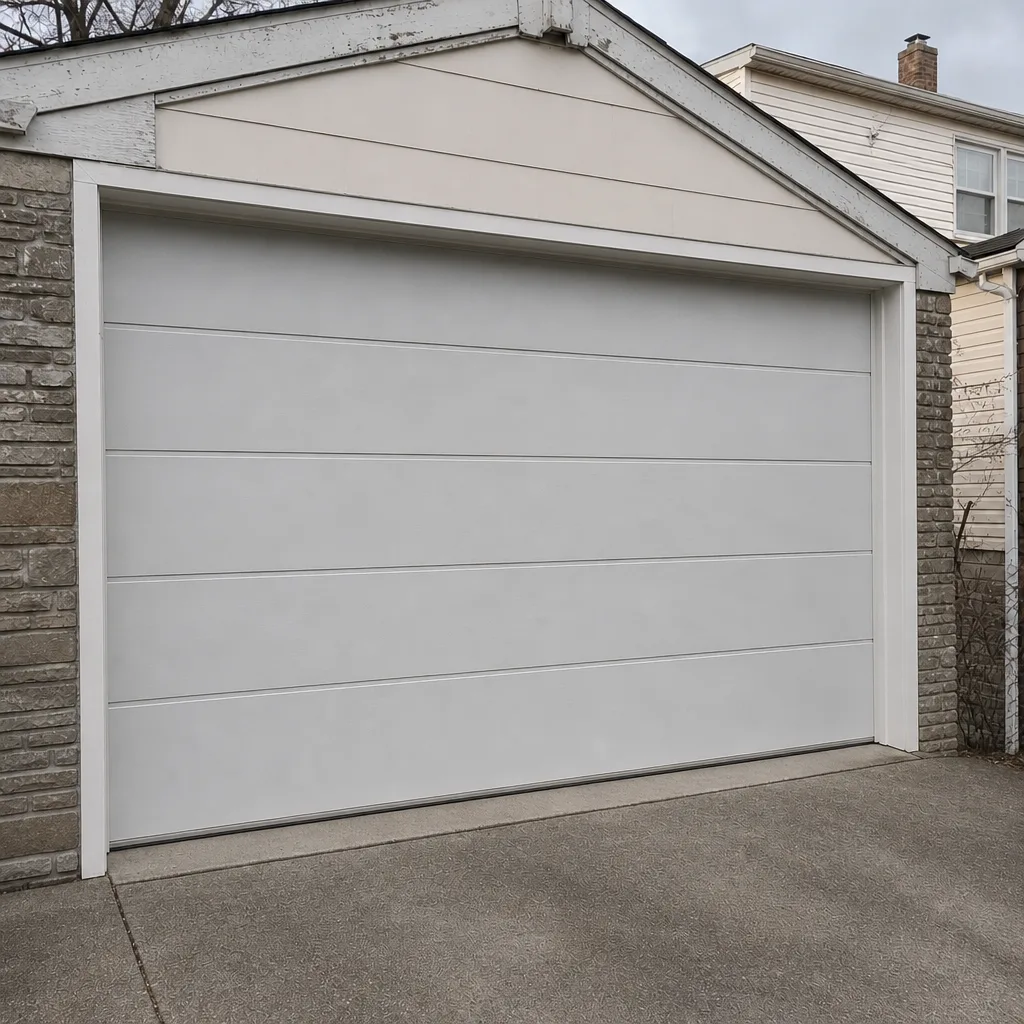
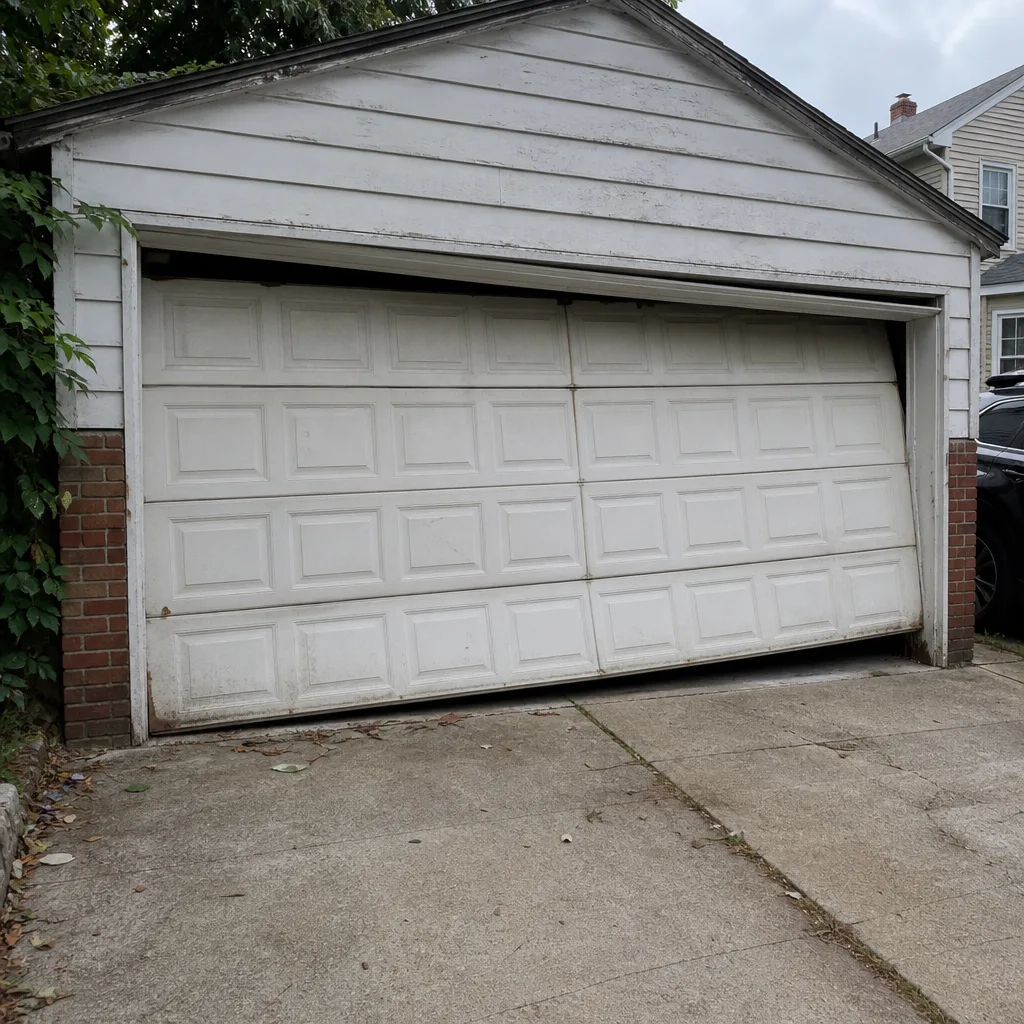
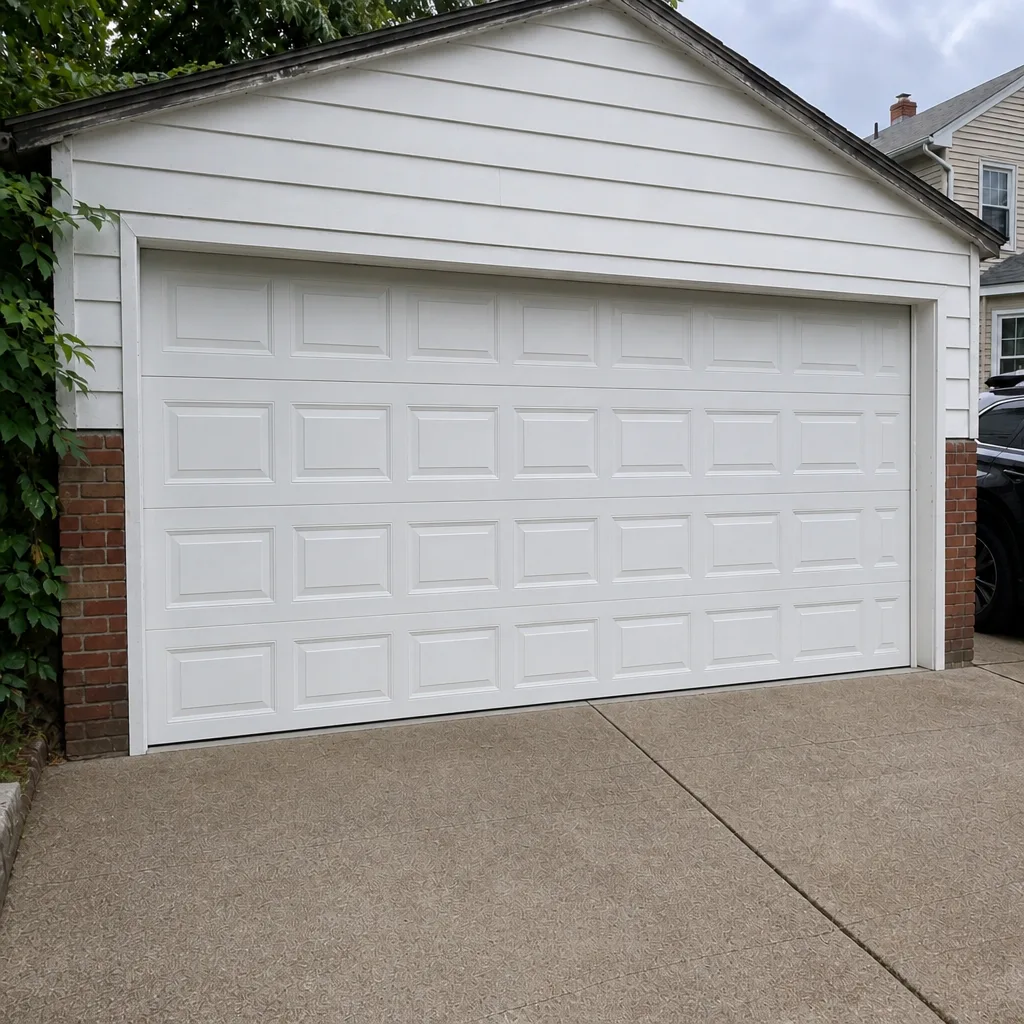
See the difference
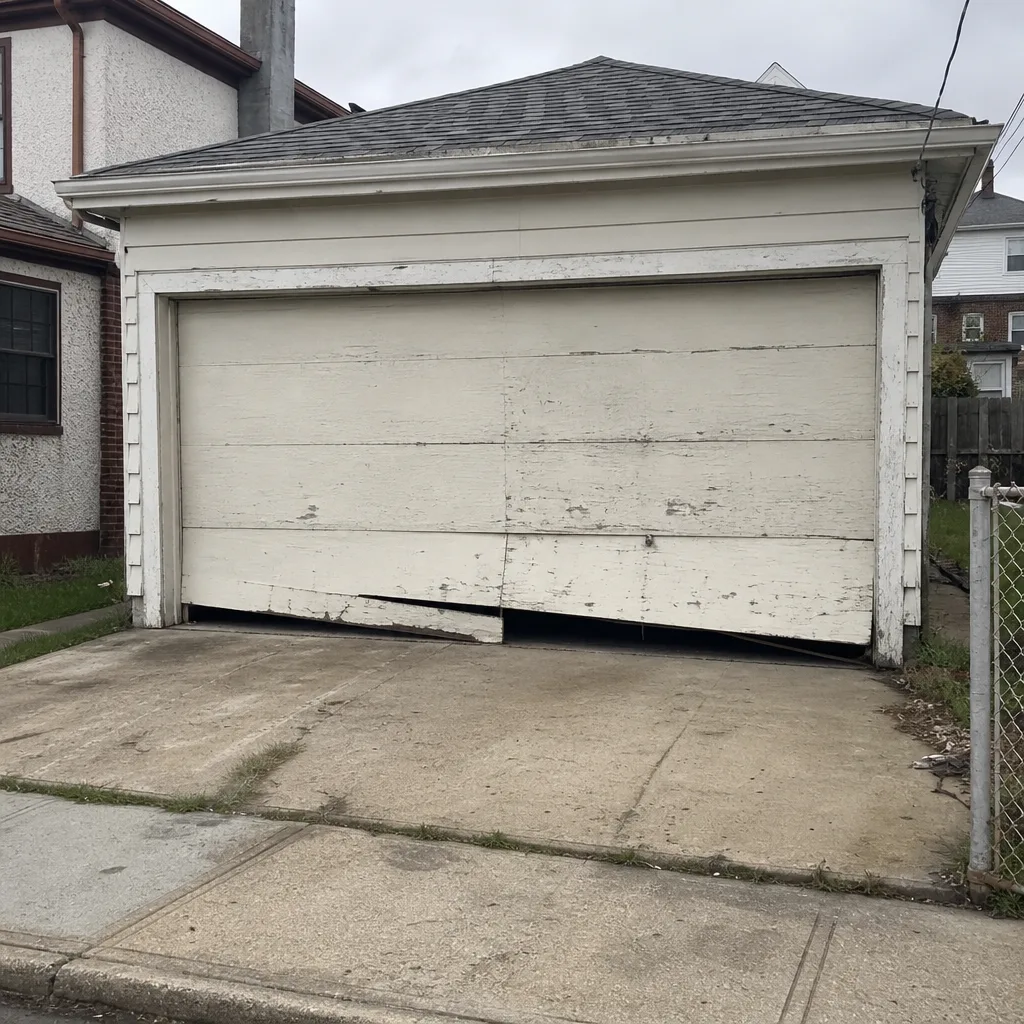 Before
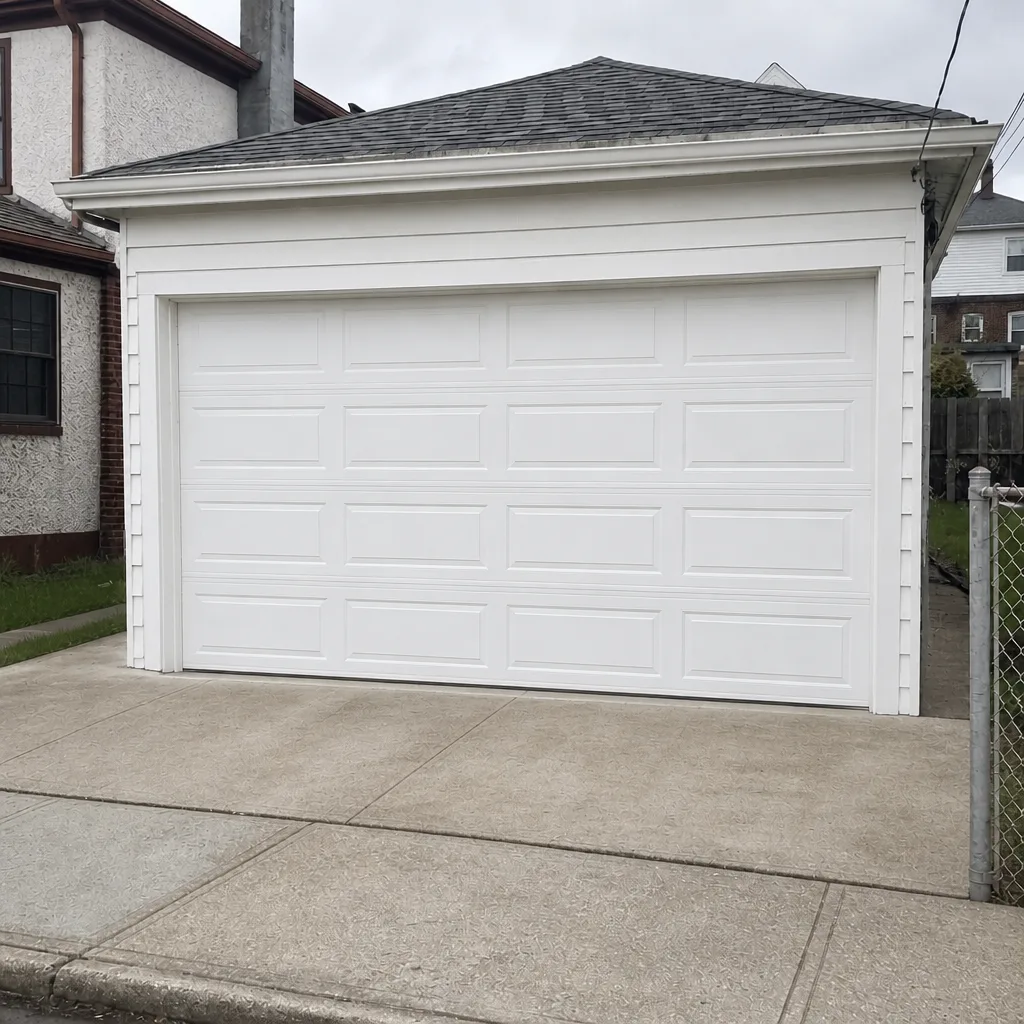 After
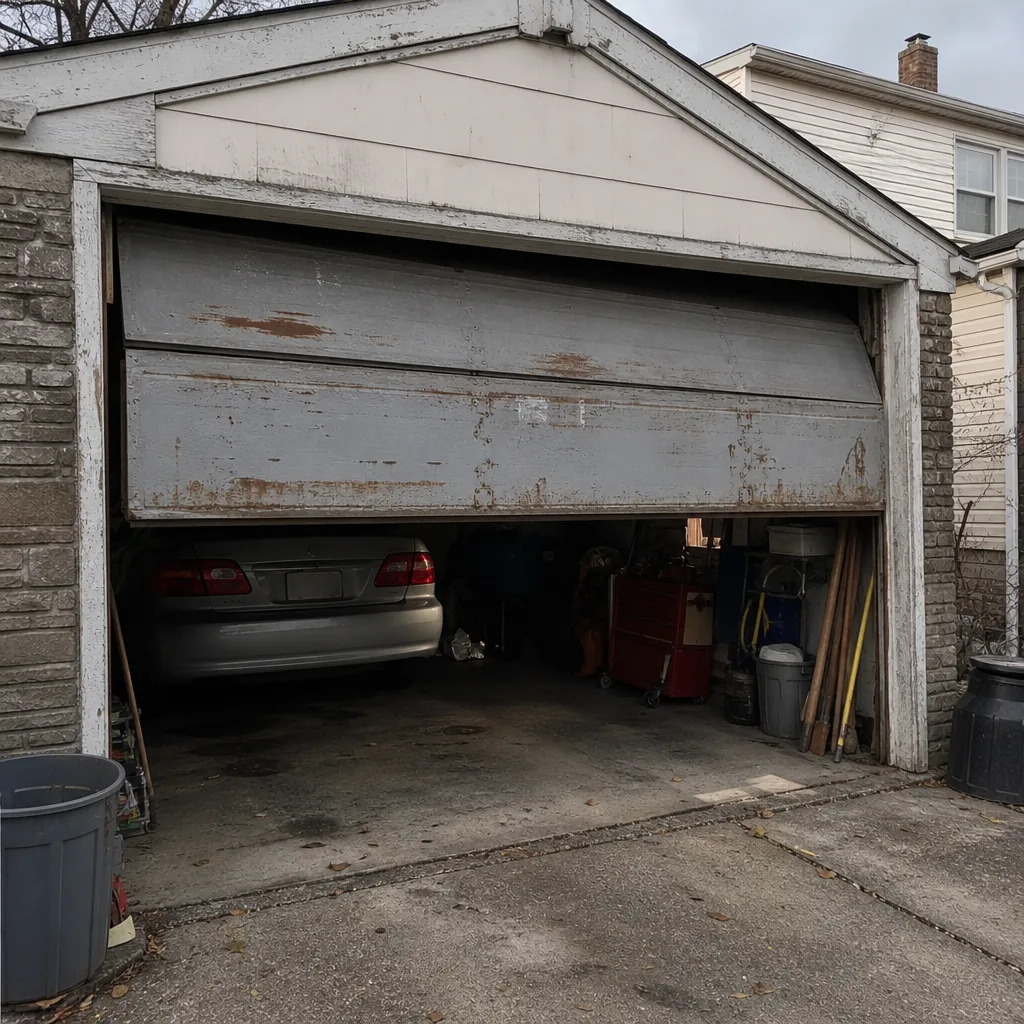 Before
 After
 Before
 After
When to Call a Professional
Some of this guide is genuinely DIY, and we’d rather you do it yourself than pay for a service call you don’t need. But there are clear situations where a trained technician is the right call. Brakes and balance are safe to check on your own. Springs, cables, and the counterbalance system are not.
Call a professional if a spring has visibly broken or snapped, if your door won’t open or close fully, if it comes off its track, or if it moves unevenly or feels unsafe to lift. Call if your opener is straining, reversing for no reason, or failing its sensors. Call if your bottom seal or weatherstripping is torn and you aren’t confident in the replacement. And call if the door has had impact damage or any visible structural damage from a hard impact or a storm.
Jamaica Garage Door Repair offers free estimates in Jamaica. We handle repair, opener diagnostics, spring replacement, and new installation, so one call covers most of what you’ll ever need. Our technicians have up to 12 years of experience, and we work on the major brands from LiftMaster and Chamberlain through Clopay, Amarr, Wayne Dalton, Craftsman, and Raynor. Call (877) 792-6197 for a free estimate.
Frequently Asked Questions
Late February and March are the highest-risk window in Jamaica, when the first mild days arrive after two months of hard freezes. The freeze-thaw cycle fatigues torsion springs all winter, and the thaw is when the accumulated stress breaks them. A pre-winter inspection the previous October is the best way to prevent that failure, and call (877) 792-6197 if you suspect your springs are already failing.
Lubricate all moving parts at least twice a year, with one of those passes in October before the cold sets in and a second in spring as humidity returns. The rollers, hinges, spring, and track pivots all need a proper garage door lubricant, not WD-40. If the winter has been long and your door is noisy, an extra pass in January helps. To schedule a lubrication and tune-up visit, call (877) 792-6197.
Wood panels swell in humid weather, and even a small amount of expansion pushes them against the tracks, which makes the door bind. Homeowners often assume the opener is failing when the real issue is the panel swelling. If your door is scraping or rubbing in May or June in Jamaica, have it looked at before the track bends permanently. Free estimates are available by calling (877) 792-6197.
Yes. Salt and sand tracked into the garage on tires and footwear settle into the floor tracks and roller channels. Salt is corrosive and stays wet longer than sand, so it works on the metal parts slowly. The fix is simple: sweep out the tracks weekly through the winter and wipe the bottom of the door clear of grit. If your track has visibly grooved or your door rolls roughly, call (877) 792-6197 for a no-cost estimate on roller and track replacement.
No. A torsion spring holds the entire weight of the door under high tension, and it’s the single most dangerous part of the system. Adjusting or replacing one without the right training and tools can cause serious injury, and we won’t recommend it. This is a specialist job, and it’s exactly why we treat spring repair as a dedicated service at Jamaica Garage Door Repair. Call (877) 792-6197 if a spring has broken.
Inspect it every August and re-paint or re-seal any panel that’s chalking, fading, or cracking. Replace weatherstripping as soon as it starts feeling brittle. UV damage is cumulative, so a quick August touch-up every year prevents a much larger repair the following season. If the panels are already cracking, call (877) 792-6197 for a free estimate on whether a repair or replacement makes more sense.
The Bottom Line
Jamaica’s garage doors don’t go through one winter and one summer. They go through four distinct stress periods, and each one puts pressure on a different part of the system. February is the freeze-thaw window that breaks springs. May and June are when humidity swells panels and drifts tracks. August is when UV exposure quietly damages paint and seals. October is the one prep window that prevents the most winter failures. If you do nothing else, do the October pass and keep the floor tracks clear of salt and sand. Everything else you can build up over the year. And when a spring, track, or opener issue is past the point of a DIY check, call (877) 792-6197 for a free estimate. Jamaica Garage Door Repair handles repair, spring replacement, and opener service across the major brands, so one call is usually all you need.
Written by the team at Jamaica Garage Door Repair.