Last updated November 21, 2026
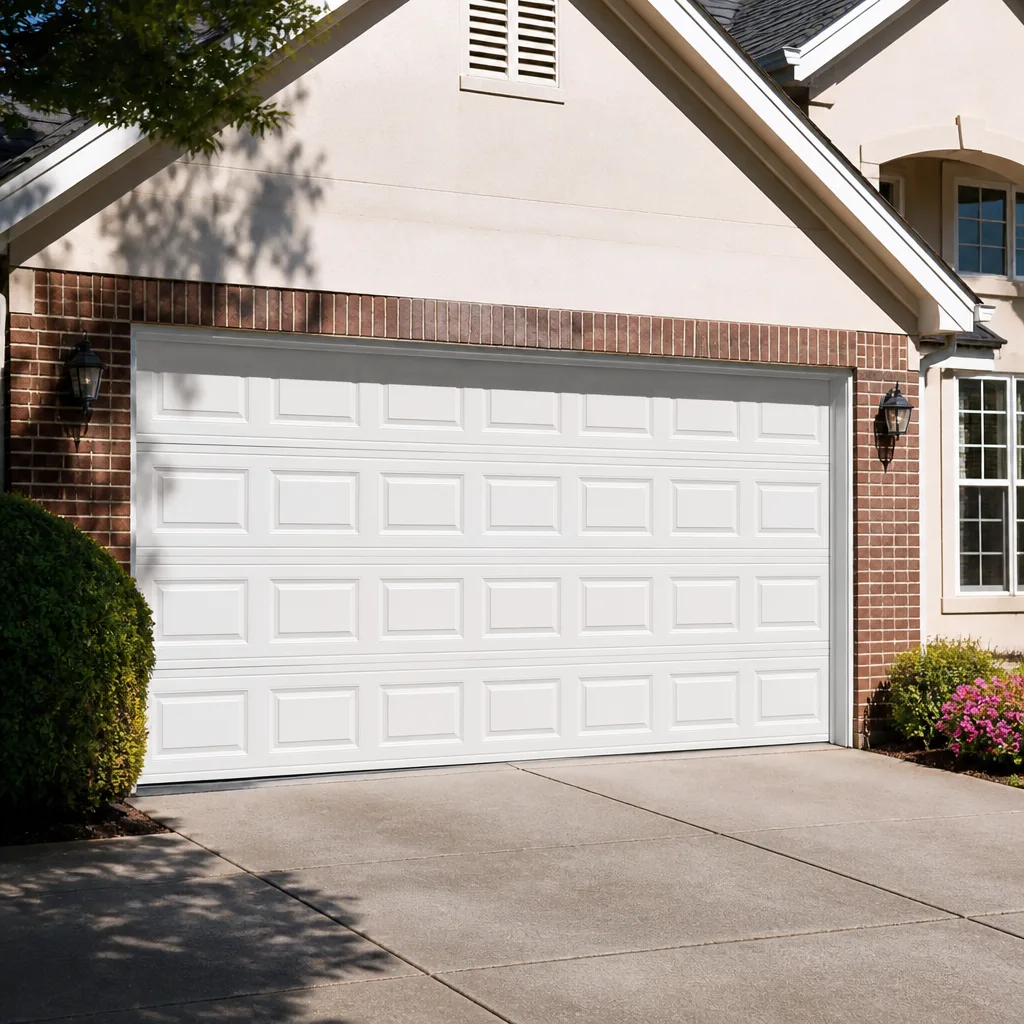 Raised-panel steel
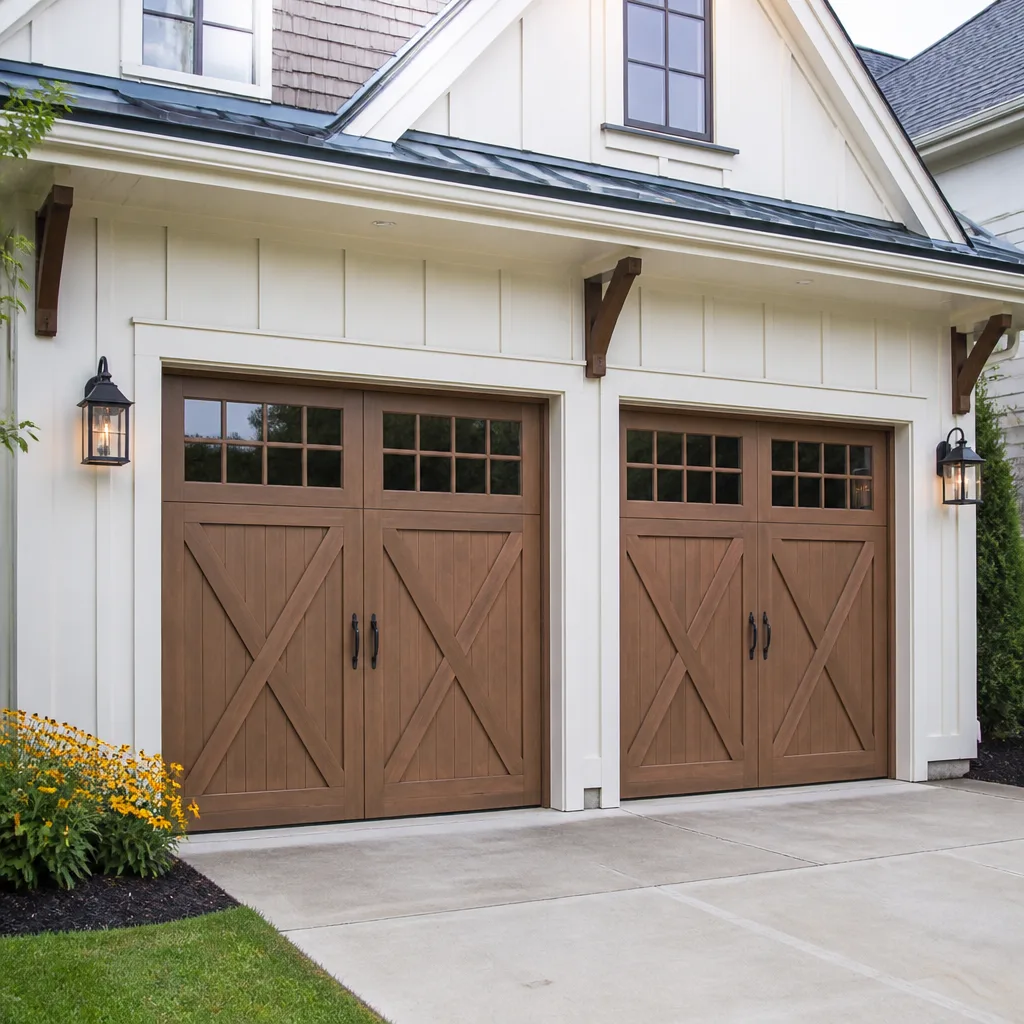 Carriage house
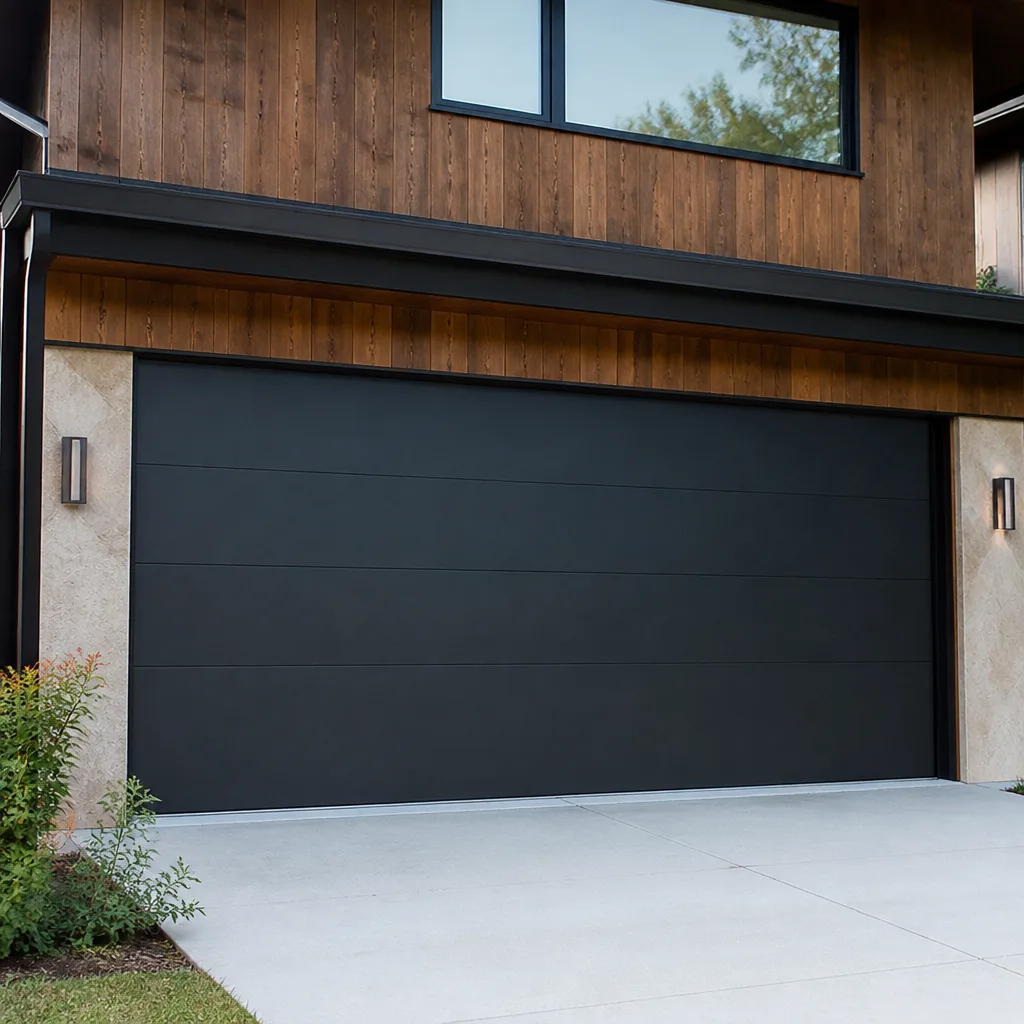 Modern flush
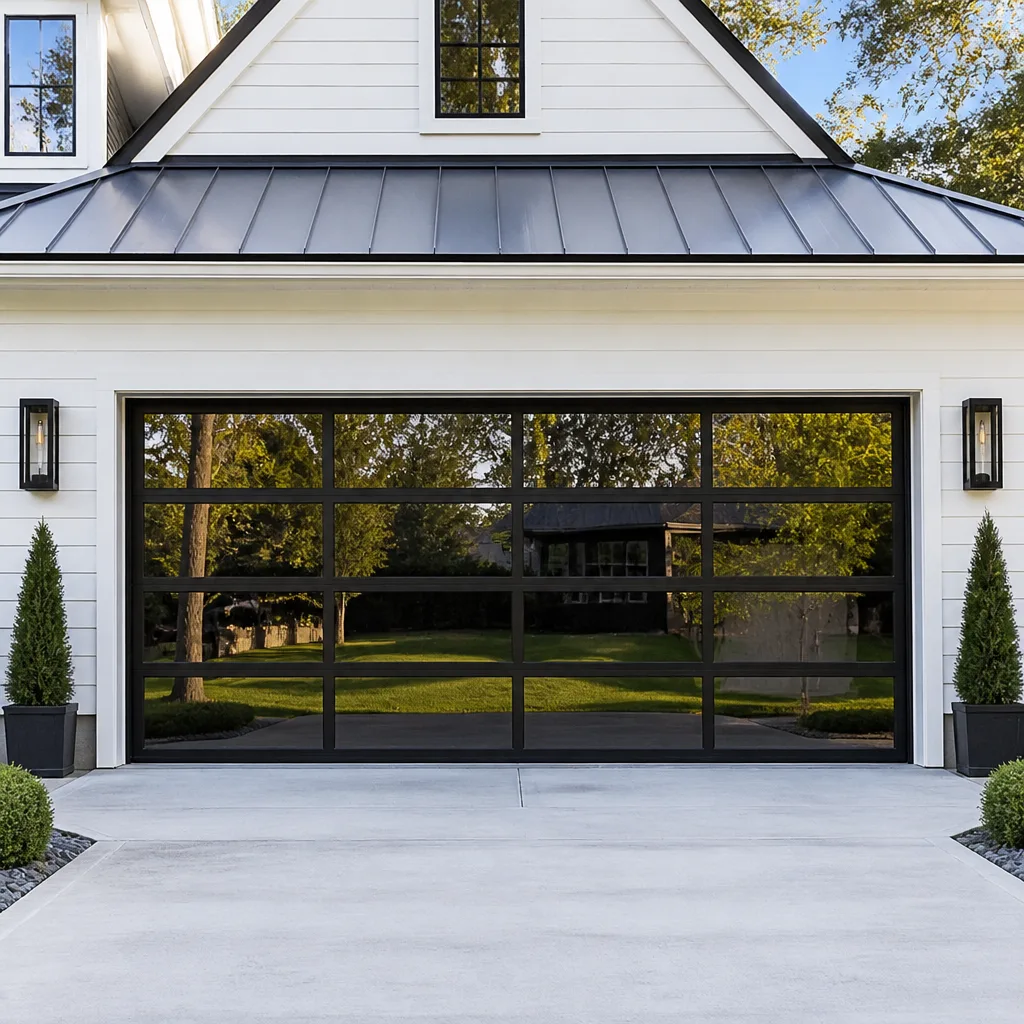 Full-view glass
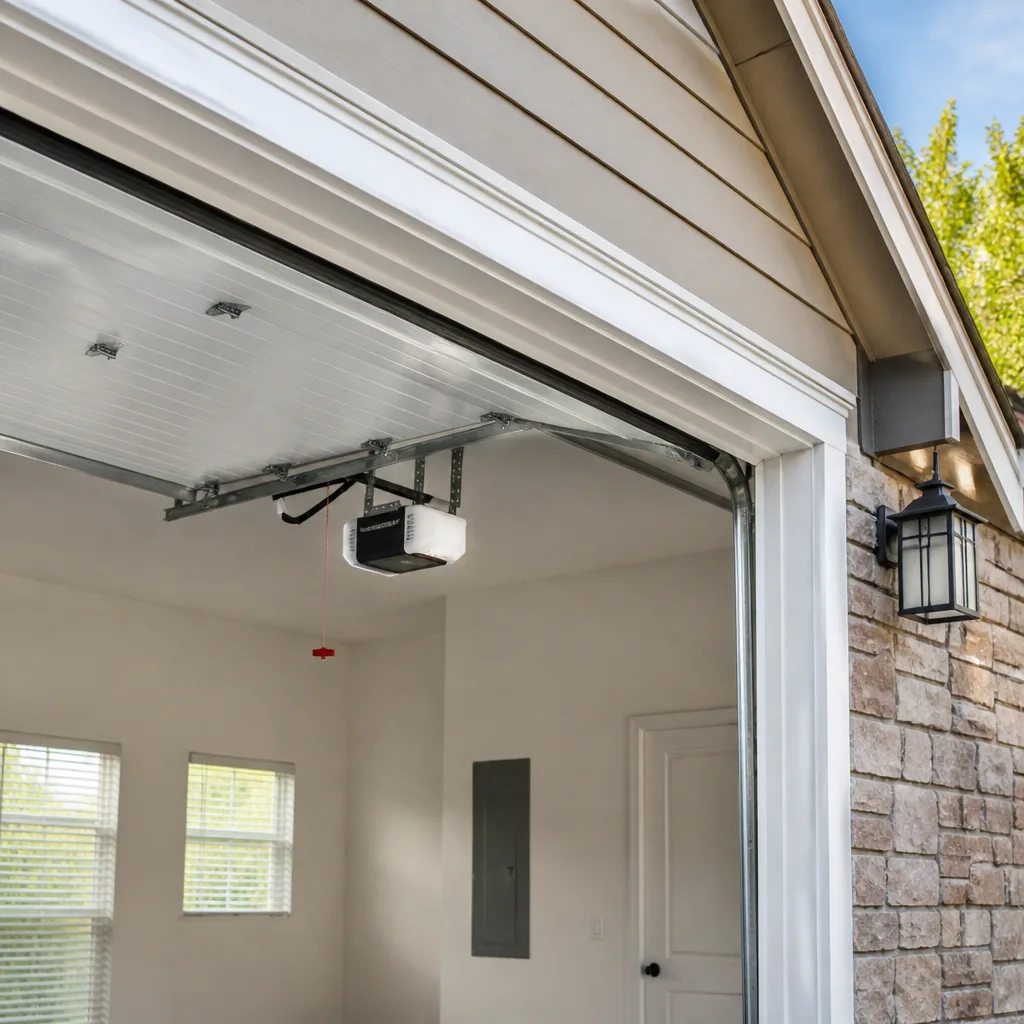 LiftMaster openers
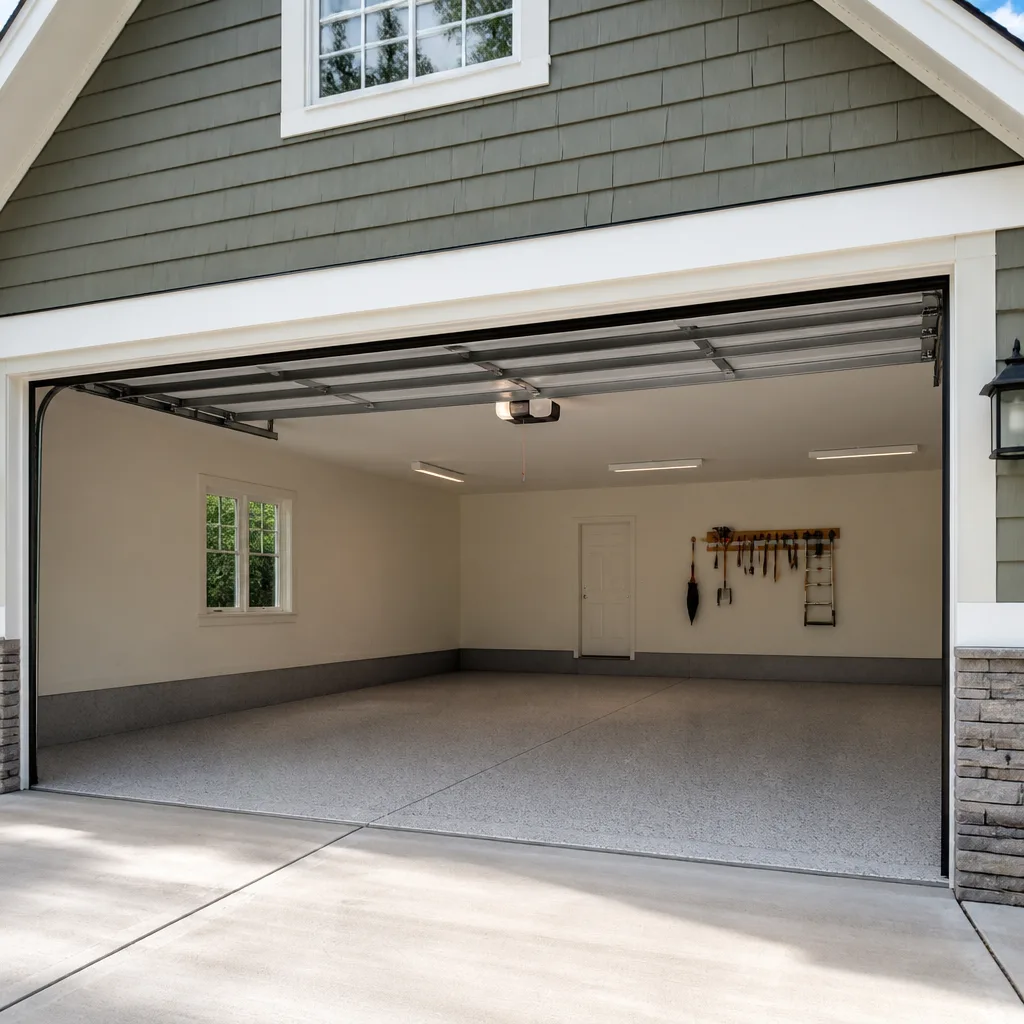 Chamberlain openers
Full 25-point door and opener safety check with every visit - springs, cables, rollers, tracks, and your LiftMaster or Chamberlain opener included
You get a price before we start. It does not change when the pro arrives.
Get your free estimateDIY vs Professional Garage Door: The Jamaica Homeowner’s Decision Guide
Torsion springs hold 150 to 300 pounds of torque. Videos showing homeowners replacing them alone are easy to find. So are the emergency room records of people who tried. That gap between what looks possible and what is actually safe is the whole argument in this guide. The DIY versus professional question for garage doors in Jamaica isn’t about whether you’re handy enough. It’s about which specific tasks carry injury risk or code implications that make DIY the wrong call no matter your skill level. We’ll draw a clear line between what you can safely handle and what needs a trained professional, and we’ll be honest about when DIY really does save you money. By the end you’ll know, for your own door in Jamaica, exactly where that line sits.
Quick Answer
You can safely handle lubrication, sensor alignment, remote reprogramming, and weatherstripping yourself. You should never DIY spring replacement, cable replacement, or track realignment – those carry serious injury risk and, in many cases, permit and warranty problems. For anything involving springs, cables, or structural track work, call a trained technician.
Styles & brands we work with
- Raised-panel steel
- Carriage house
- Modern flush
- Full-view glass
- LiftMaster openers
- Chamberlain openers
Table of Contents
- The Safe vs. Unsafe Split: What You Can and Can’t Do
- Why Springs and Cables Are a Different Kind of Dangerous
- How NYC Building Code Settles the DIY Question
- The Warranty Trap: What DIY Costs You Down the Road
- An Honest Cost Comparison: When DIY Saves and When It Backfires
- What to Prepare Before a Technician Arrives
- Why Brand Familiarity Changes the Repair
- When a Jamaica Door Emergency Can’t Wait
The Safe vs. Unsafe Split: What You Can and Can’t Do
Most garage door problems fall into two clean categories: the ones a careful homeowner can handle in an afternoon, and the ones that belong to a trained technician, full stop. The trick is knowing which is which before you pick up a wrench.
Safe to do yourself:
- Lubrication. A few drops of garage door lubricant on the hinges, rollers, and tracks keeps everything moving quietly. Do it a couple of times a year.
- Sensor alignment. If the door reverses for no reason, the safety sensors near the floor are usually misaligned or blocked. Straightening them and clearing the lens fixes most of these.
- Remote and keypad reprogramming. Replacing a remote or changing a code is a manual-and-button job, nothing more.
- Weatherstripping replacement. The rubber seal along the bottom and sides wears out. Swapping it is straightforward and cheap.
- Visual inspections. Looking for frayed cables, worn rollers, or a door that hangs crooked is free and worth doing monthly.
Never DIY:
- Spring replacement. Torsion and extension springs store enormous energy. This is the single most dangerous garage door repair there is.
- Cable replacement. Cables are under constant tension and can whip loose with terrible force.
- Track realignment or replacement. A bent or misaligned track throws the whole door out of balance and can bring it down.
- Panel and structural repairs. These affect how the door sits in its frame and whether it closes safely.
- Opener motor or gear work. Beyond a battery change or a reset, opener internals are a job for someone who knows the unit.
In our experience around Jamaica, the problems homeowners get into trouble with are almost always on the second list. The first list is where a Saturday afternoon and a little patience genuinely pay off.
Why Springs and Cables Are a Different Kind of Dangerous
A torsion spring is a coiled steel bar wound tight enough to lift a door that can weigh well over a hundred pounds. Even when the door looks “down” and harmless, that spring is still loaded. That stored energy is the reason this job belongs to trained hands, not a tutorial.
When a spring fails, it doesn’t fail gently. It snaps. A torsion spring can release its tension in a fraction of a second, and anyone standing in the wrong place – hands on a winding bar, face near the shaft – can be seriously hurt. Cables behave the same way: they’re under constant tension and can whip across a garage with enough force to break bone. These aren’t hypothetical risks. They’re the reason spring repair is treated as its own specialty, not a general handyman task.
A few things worth understanding before you go near a spring or cable:
- There’s no “safe” way to test whether a spring is still loaded. If the door won’t lift, assume it’s under tension and stop.
- Winding bars and the right technique matter more than strength. This is a controlled release, not a muscle job, and getting it wrong is how people get hurt.
- Modern springs are often a matched pair. Replace one and the other is usually close behind, which is why pairs are done together.
This is exactly why we treat spring repair as a dedicated service rather than a side task. It’s the most mechanically dangerous job on a garage door, and it deserves technicians who do it regularly. If your door won’t lift, or you hear a loud bang from the garage, don’t try to diagnose it yourself. Call us and we’ll take it from there.
How NYC Building Code Settles the DIY Question
Some garage door work is more than a repair – it’s construction, and construction in New York City runs on permits. That changes the DIY math entirely, because a permit generally has to be pulled and the work performed by a licensed professional. You can’t self-perform work that legally requires a licensed contractor to file.
The short version: if a job needs a permit, DIY isn’t just risky, it may not be legally permitted for a homeowner to do alone. New garage door installation and structural changes are the usual examples. A repair that swaps a part in kind is a different story from one that alters the structure or requires an inspection to sign off.
Here’s how to think about it for a Jamaica home:
- Ask first. Before any significant garage door work, call your local NYC building department and ask whether the specific job needs a permit. They answer this question all day.
- Treat “permit required” as a stop sign for DIY. If the answer is yes, plan on a licensed professional doing and filing the work.
- Keep records. If a permit is involved, keep the paperwork – it matters if you ever sell the home or need an inspection.
We’re not going to quote you a code section or pretend to know every local rule off the top of our heads. What we will say is that permit questions come up most often with installation and structural work, less with a like-for-like repair. When in doubt, the building department is the source, and a quick call saves a lot of guessing. If you’re weighing a bigger project and want to understand how the work is scoped, our garage door installation page walks through what a proper install involves.
The Warranty Trap: What DIY Costs You Down the Road
Here’s the part almost no DIY guide mentions: the repair you do yourself can quietly void the warranty on the equipment you paid for. When a manufacturer’s warranty is on the line, “I fixed it myself” is often all it takes to lose coverage.
Most major opener brands – LiftMaster and Chamberlain among them – tie their warranty coverage to the work being done correctly and, in many cases, by a qualified technician. If a non-certified person does mechanical work on the opener or the door and something fails later, the manufacturer can decline the claim. You saved a little on labor and lost a warranty that could have covered a motor or a control board.
The risk shows up in a few predictable ways:
- Opener internals. Crack open a LiftMaster or Chamberlain unit yourself and a later motor or gear failure may not be covered.
- Improper spring or cable work. A failed spring replaced incorrectly can stress the opener and lead to a claim denial on the opener side.
- Off-brand parts. Dropping in a cheap substitute for a Clopay or Amarr component can void coverage on the door hardware.
We work on your brand, which means we know how these warranties read and how to do the work in a way that keeps coverage intact. That’s a quieter kind of savings than a DIY afternoon, but it’s real money when a control board or motor goes.
An Honest Cost Comparison: When DIY Saves and When It Backfires
DIY isn’t always the wrong call, and we won’t pretend it is. There are jobs where doing it yourself genuinely saves money and jobs where a botched attempt costs more to undo than a professional would have charged in the first place. The honest answer depends on which job you’re looking at.
Where DIY actually saves:
- Lubrication and cleaning. A few dollars in lubricant and an hour of your time. No reason to pay anyone.
- Sensor alignment and remote reprogramming. Free or near-free, and low risk.
- Weatherstripping. The materials are inexpensive, and the job doesn’t touch the spring or track system.
Where DIY backfires:
- Spring work. Beyond the injury risk, a wrong-size spring or a mis-wound torsion bar can damage the door and opener and leave you paying for both.
- Cable and track repairs. A door knocked out of balance can bend panels and rails, turning a small fix into a bigger one.
- Opener internals. Opening a Genie or Chamberlain unit without the right parts often ends in a full replacement that a repair would have avoided.
We quote every job in writing before any work starts, so you’re never guessing at the number. Estimates are free, and the written quote is the price – call (877) 792-6197 if you’d rather know the cost than gamble on it. For a faster read on repair-specific questions, the garage door repair page covers what typical fixes involve.
What to Prepare Before a Technician Arrives
A little prep on your end can shorten the visit and keep the bill down. None of it involves touching the spring or cable – it’s all information and access, the things that let a technician work faster.
- Note the brand and model. Check the label on the opener and the door. Knowing whether you have a LiftMaster, Chamberlain, or Genie unit – or a Clopay door – means we can prepare for your exact system.
- Write down the symptoms. Does the door reverse? Is it loud? Does the opener run but the door doesn’t move? Specifics speed up diagnosis.
- Clear the garage floor. Give the technician room to work and test the door through its full travel.
- Make sure the garage is accessible. Unlock any side door and know how to release the opener if asked.
- Gather any paperwork. Manuals, warranty info, or records of past service help us choose parts that match.
That’s it. You don’t need to diagnose anything or loosen a bolt. The brand and the symptoms are the two things that save the most time, and both are sitting on a label or in your memory. When we know the system before we arrive, we’re not figuring it out on the job – we’re fixing it.
Why Brand Familiarity Changes the Repair
A garage door is a system of two halves: the door hardware and the opener that drives it. When something goes wrong, the fix depends on which half is at fault and on which brand you own. A technician who has to figure out your equipment on the spot is already behind.
We service equipment from eight of the most widely installed garage door and opener brands – LiftMaster, Chamberlain, Genie, Clopay, Amarr, Wayne Dalton, Craftsman, and Raynor. That covers both the door manufacturers and the opener and drive systems, so there’s no need to call two different contractors for one problem. One call covers the door and the opener.
Why does that matter for the DIY question? Because the parts and the procedures differ by brand. A spring sized for one door isn’t right for another. An opener from one brand has different internal tolerances than the next. When you know the system, the repair is measured and the right part goes in. When you don’t, it becomes trial and error – and trial and error on a garage door is how small problems turn into big ones. If your opener is the part acting up, our garage door opener repair page goes deeper on what’s usually involved.
When a Jamaica Door Emergency Can’t Wait
Some failures leave you stuck. A snapped spring traps the car inside. A door that won’t close leaves the garage open to the street. A door hanging off its track is a hazard you don’t want to leave sitting. Those aren’t jobs to schedule for next week, and they’re certainly not jobs to attempt yourself at ten at night.
Emergency garage door service is something we offer for exactly these situations. We can’t promise a specific arrival window, but we can tell you that a broken spring or a stuck door is the kind of call we take seriously rather than push to a standard appointment. If your door is stuck open or won’t open at all, stop forcing it – the more you run the opener against a broken door, the more damage you do to the opener itself.
For a door that’s stuck, the safe move is to leave it alone and call. We’ll talk through what’s happening and get a technician out. The same brand knowledge that helps on a routine repair is what lets us handle the emergency call without guessing at your equipment. Reach us at (877) 792-6197.
Common Mistakes to Avoid
- Forcing a door that won’t move. If the opener runs but the door doesn’t lift, something is broken – a spring, a cable, or the opener itself. Keep hitting the button and you’ll burn out the opener motor on top of the original problem.
- Assuming a loud door just needs oil. Noise can mean worn rollers, which are harmless, or a failing spring, which isn’t. In Jamaica’s older housing stock, a door that’s been neglected for years often has more than one issue at once.
- Replacing one spring when it’s a pair. Springs are usually matched, and when one breaks the other is close behind. Swapping just one means you’re back under the door again soon.
- Buying a “universal” spring or part. Garage door parts are brand- and weight-specific. A mismatched part strains the door and the opener and can void your warranty.
- Ignoring a door that reverses on its own. That’s often the safety sensors, which is a quick fix – but if it’s not the sensors, it can be a sign of a deeper problem. Don’t keep overriding it and walking away.
- Doing structural or permit work yourself. If the job needs a permit, it generally needs a licensed professional. Skipping that step can come back to bite you on inspection or resale.
- Opening the opener to “take a look.” On a LiftMaster or Chamberlain unit, a DIY peek under the hood can void the warranty on work that would otherwise have been covered.
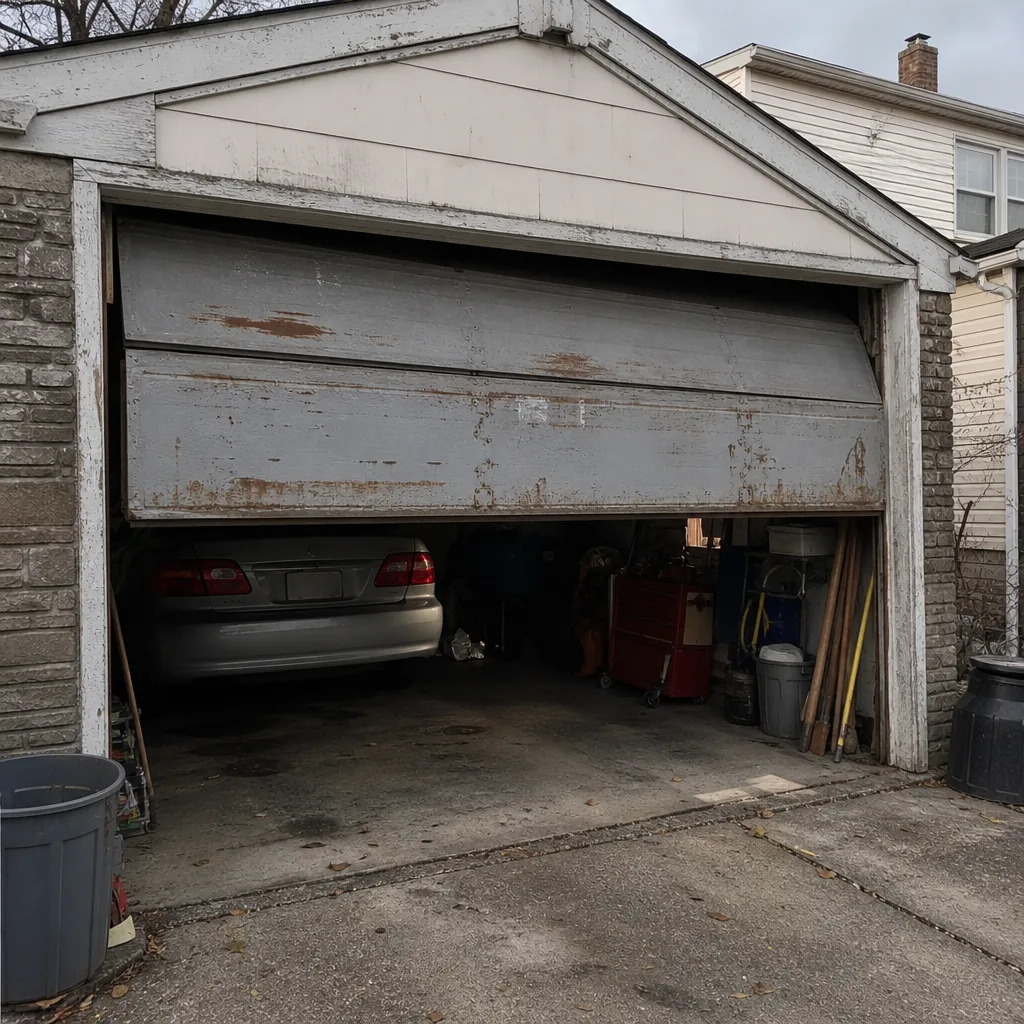
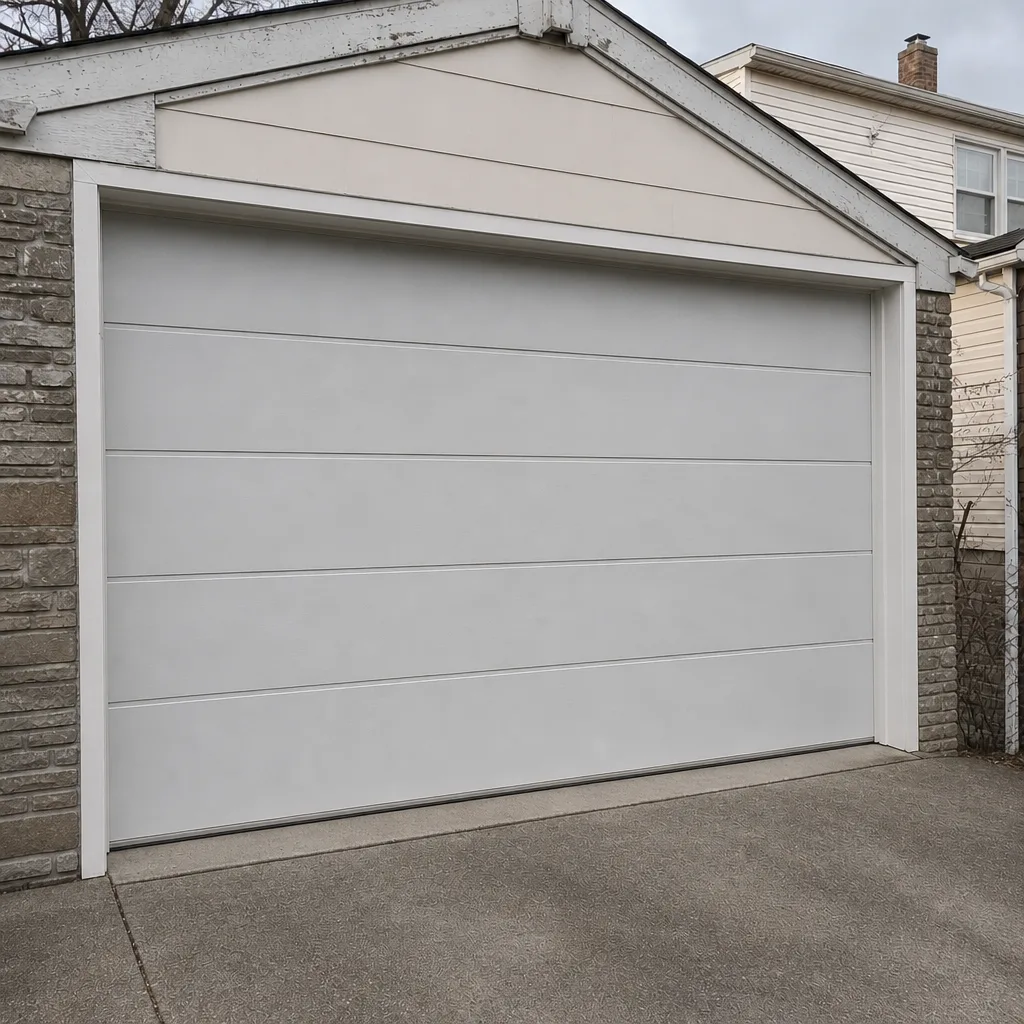
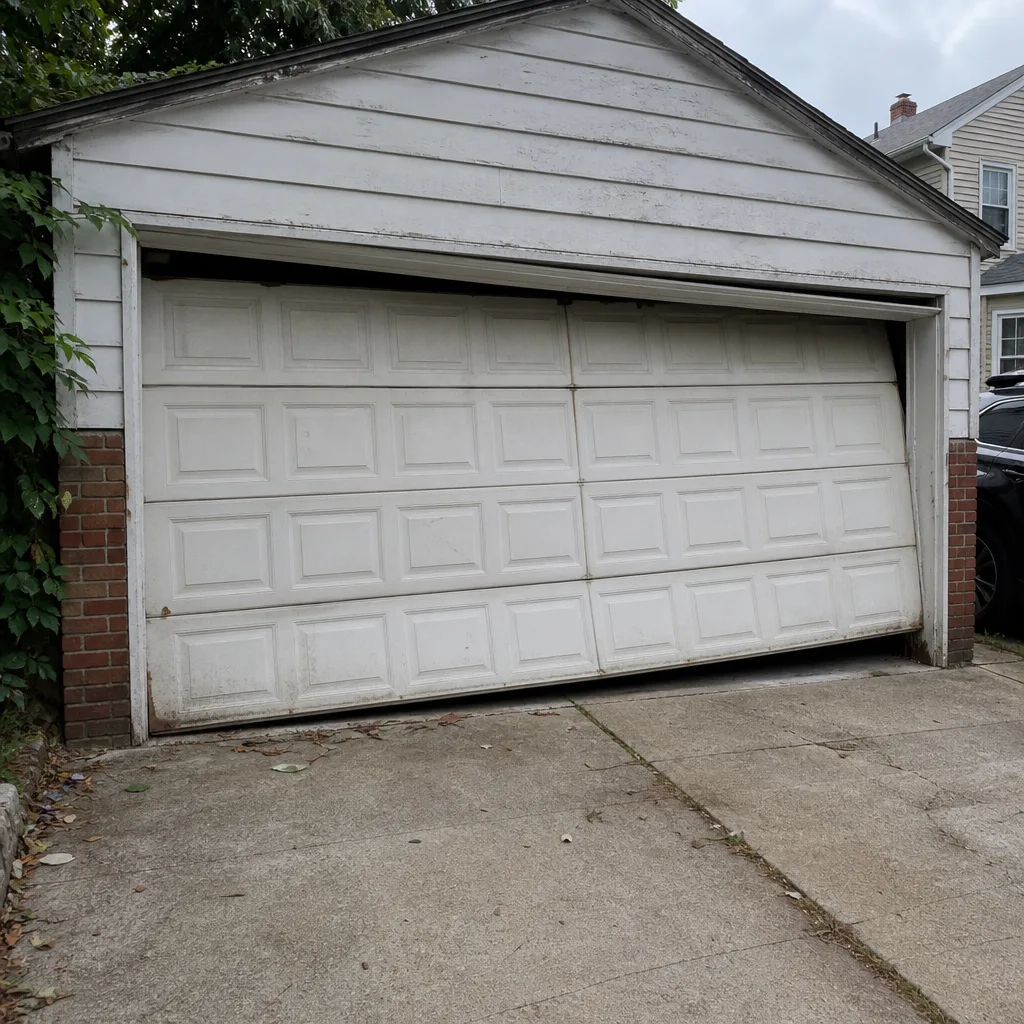
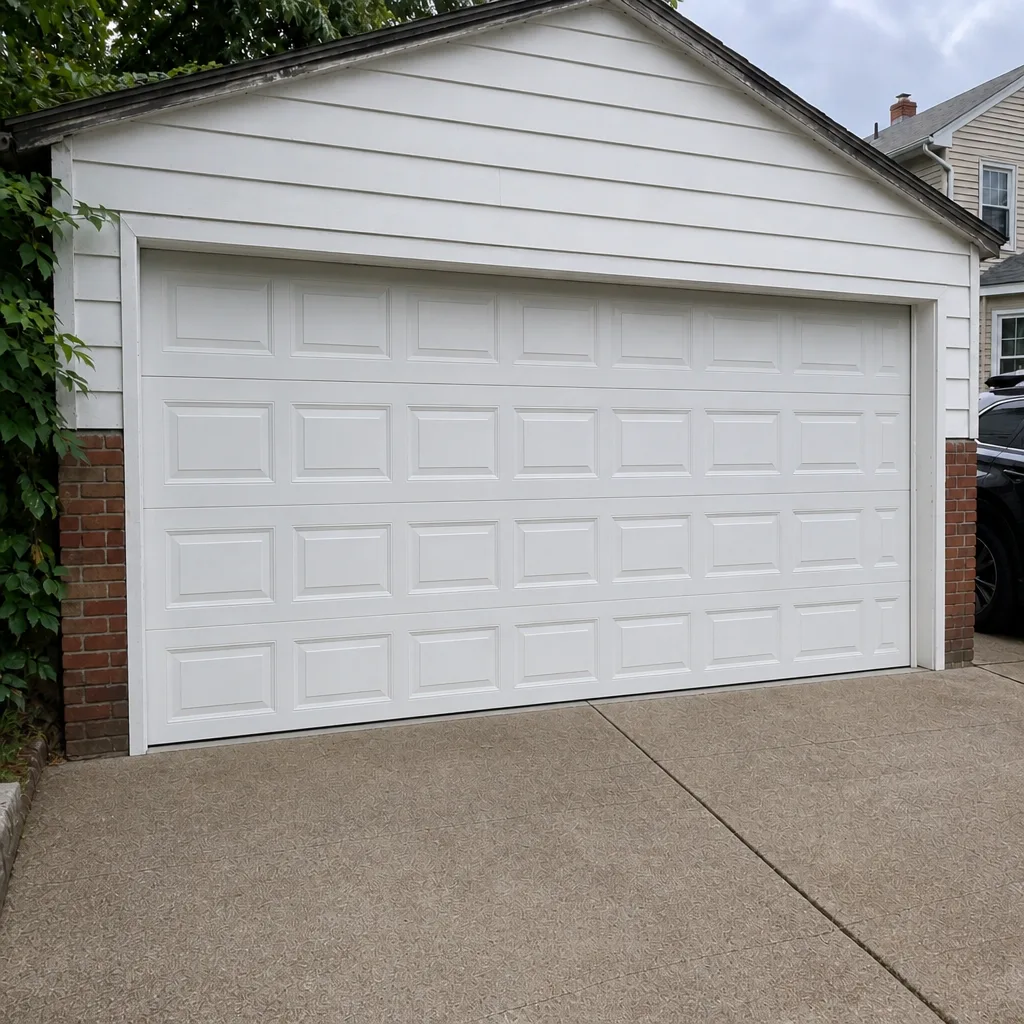
See the difference
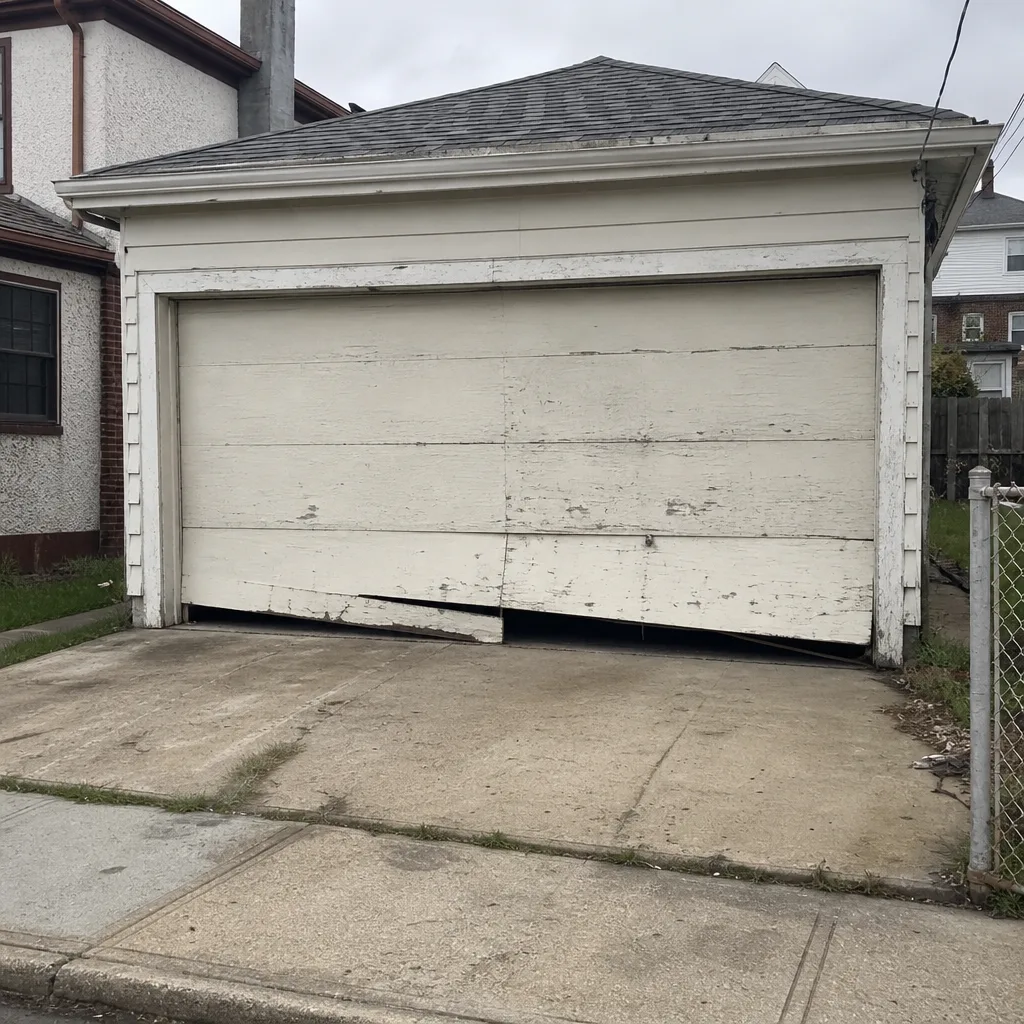 Before
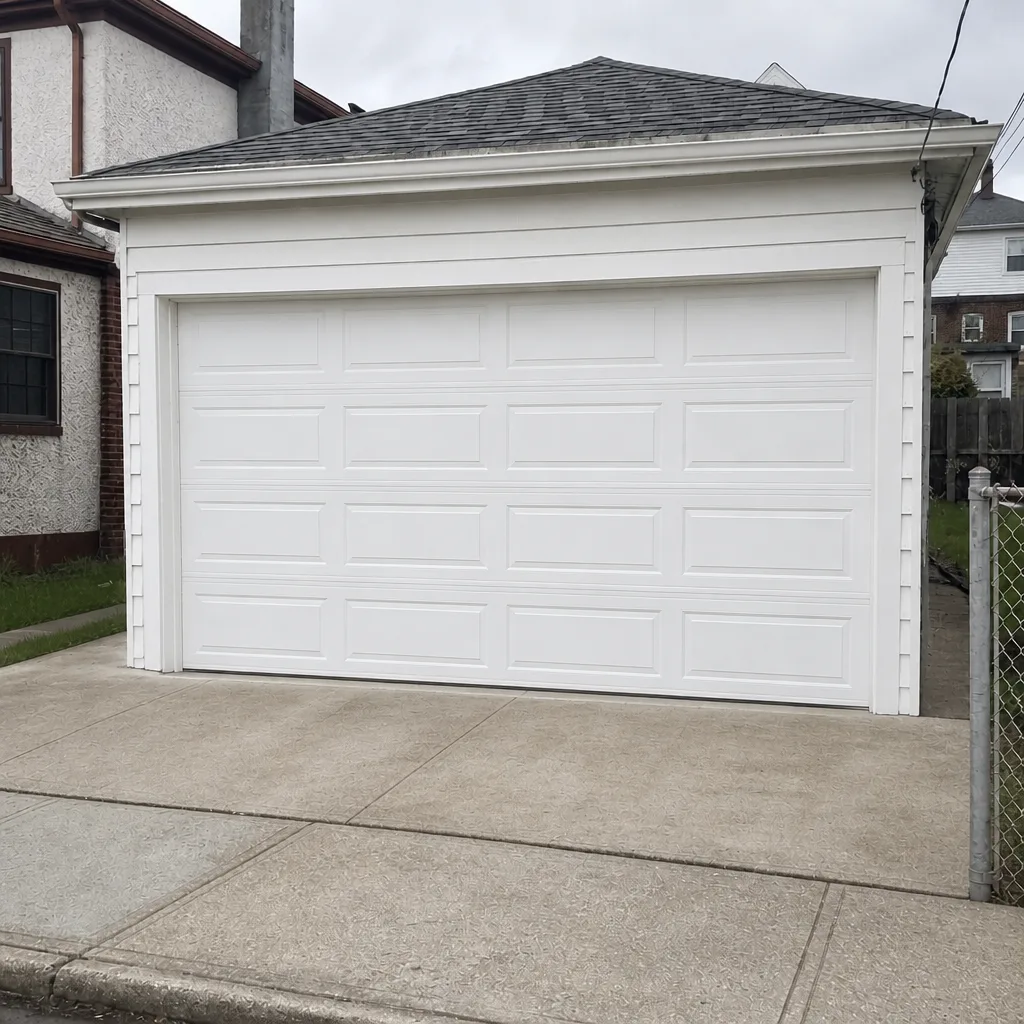 After
 Before
 After
 Before
 After
When to Call a Professional
Call a professional the moment a spring, cable, or track is involved. If the door slams down, springs back up, hangs crooked, or won’t lift at all, stop and pick up the phone. The same goes for any opener problem beyond a battery or a reset, and for any structural or permit-required work. Those aren’t skill judgments – they’re safety and code lines, and they don’t move based on how confident you feel. For the tasks on the safe list, DIY is fine and we’ll cheer you on. For everything past that line, it’s a trained technician’s job.
Jamaica Garage Door Repair offers free estimates in Jamaica – call (877) 792-6197. We quote in writing before any work starts, so the price is agreed before a tool comes out.
Frequently Asked Questions
No. Spring replacement is the most dangerous garage door repair there is, because torsion springs hold 150 to 300 pounds of torque and can release it in a fraction of a second. Even if the door looks down and harmless, the spring is loaded. This is a job for trained technicians, not a weekend project. Call (877) 792-6197 and we’ll handle it safely.
You can safely handle lubrication, safety sensor alignment, remote and keypad reprogramming, weatherstripping replacement, and visual inspections. Those tasks don’t touch the spring or cable system and carry little risk. Anything involving springs, cables, track realignment, or opener internals should go to a professional.
It often can. Most major opener brands, including LiftMaster and Chamberlain, tie warranty coverage to the work being done correctly and, in many cases, by a qualified technician. If non-certified work leads to a later failure, the manufacturer can decline the claim. Call us before opening the unit so your coverage stays intact.
It depends on the job. Repairs that swap a part in kind usually don’t, while installation and structural changes often do require a permit – and permit work generally must be done by a licensed professional. Call your local NYC building department to confirm for your specific project. We’re glad to help scope the work either way.
Not necessarily. For lubrication, sensors, remotes, and weatherstripping, DIY saves real money and makes sense. For spring, cable, track, or opener work, a botched DIY attempt often costs more to undo than a professional repair would have cost to begin with – and that’s before the injury risk. Estimates are free, so call (877) 792-6197 for an exact price.
We work on eight of the most widely installed brands – LiftMaster, Chamberlain, Genie, Clopay, Amarr, Wayne Dalton, Craftsman, and Raynor. That covers both door manufacturers and opener drive systems, so one call handles the door and the opener. Call (877) 792-6197 and tell us your brand.
The Bottom Line
The DIY versus professional question isn’t really about how handy you are. It’s about a short, clear line: tasks that don’t touch the spring, cable, or track are yours to handle, and tasks that do belong to a trained technician. Cross that line and you’re risking injury, a voided warranty, and a repair bill bigger than the one you avoided. Lubrication, sensors, remotes, and weatherstripping? Do them yourself. Springs, cables, track, structure, and permit work? That’s a professional’s job, explained in writing and quoted before any work starts. In Jamaica, that line is the whole decision, and now you know where it sits.
At Jamaica Garage Door Repair, our technicians have up to 12 years of experience. We work on your brand, handle emergency service when a door can’t wait, and cover repair, installation, opener repair, and spring replacement under one company. Call (877) 792-6197 for a free estimate.
Written by the team at Jamaica Garage Door Repair.