Last updated November 21, 2026
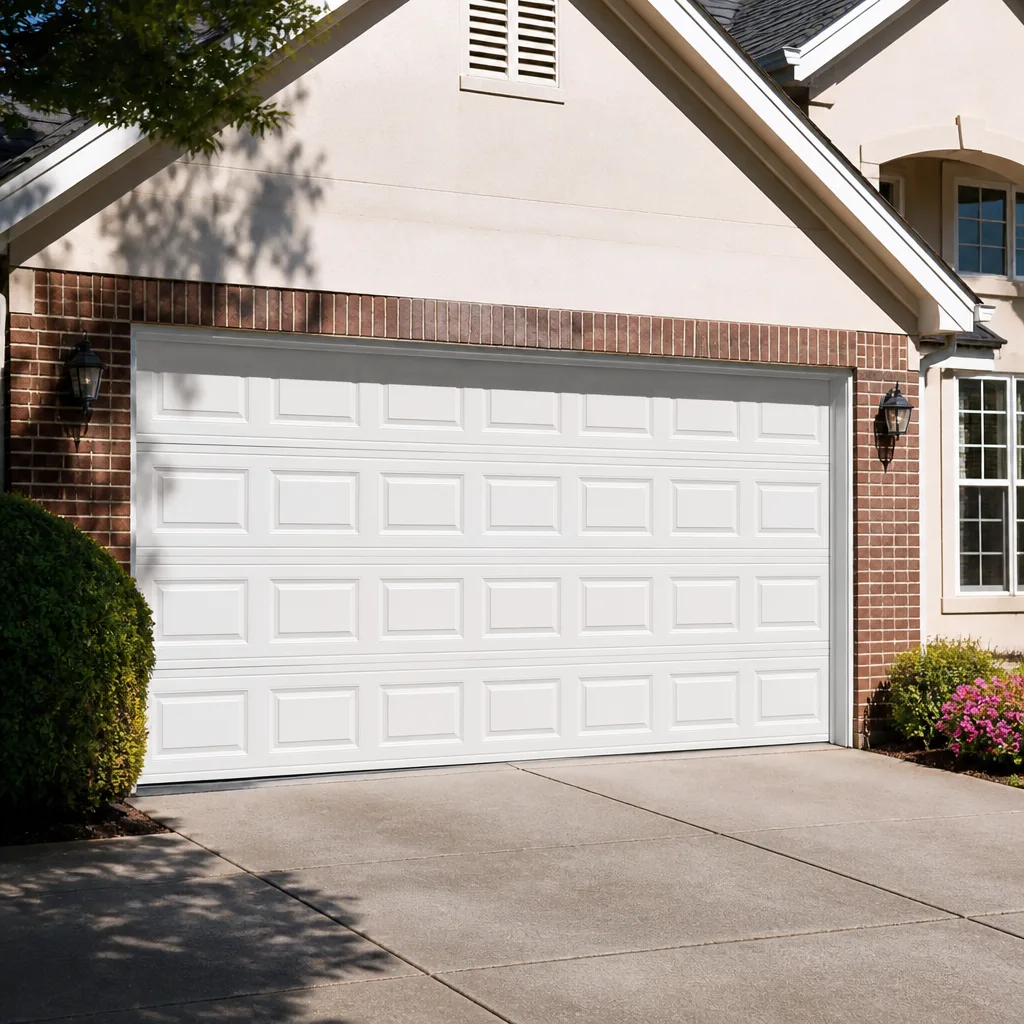 Raised-panel steel
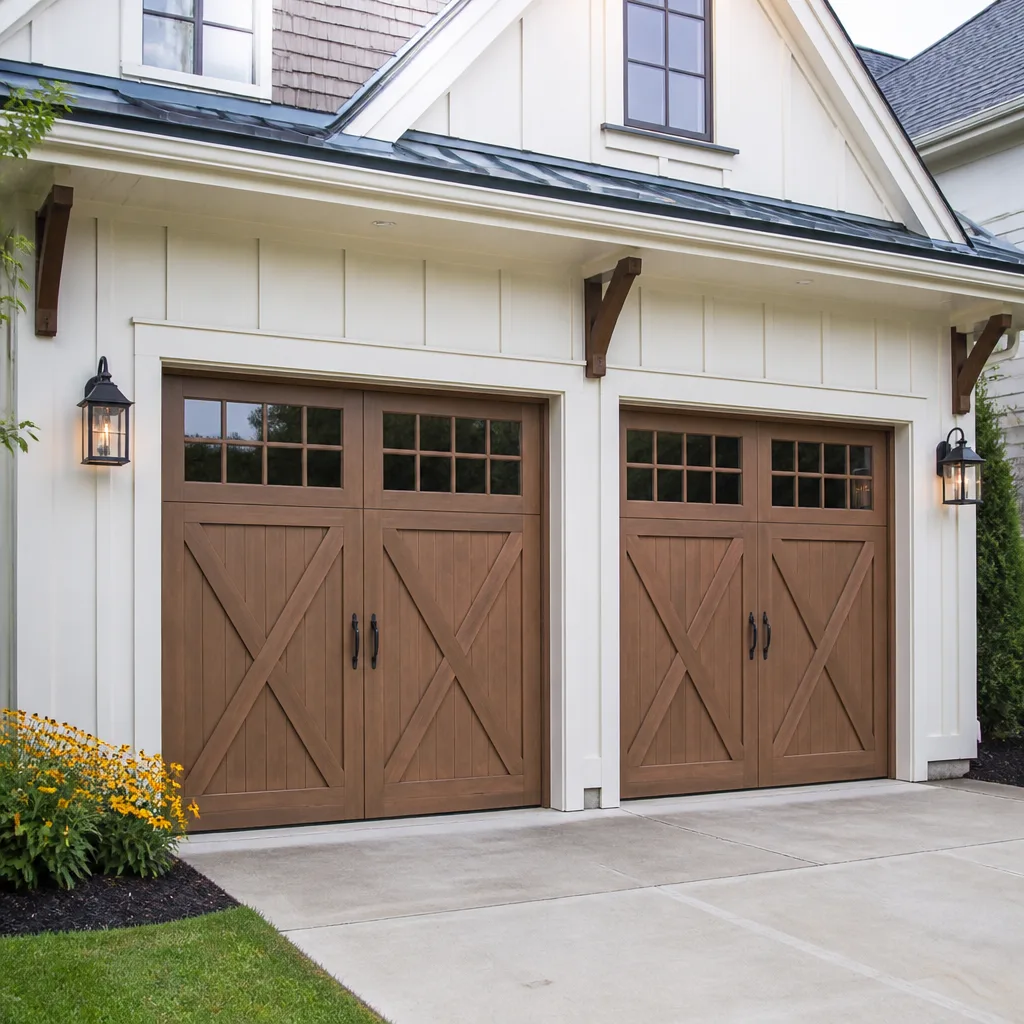 Carriage house
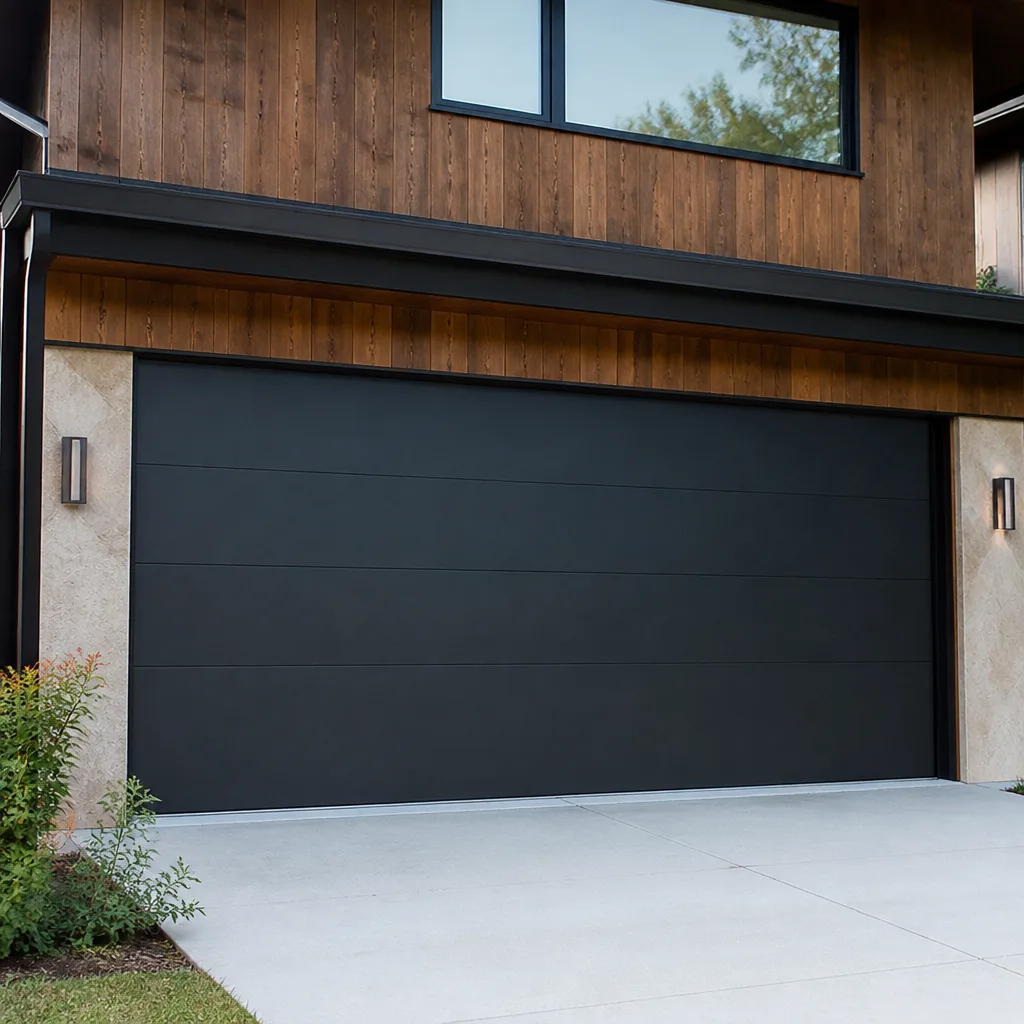 Modern flush
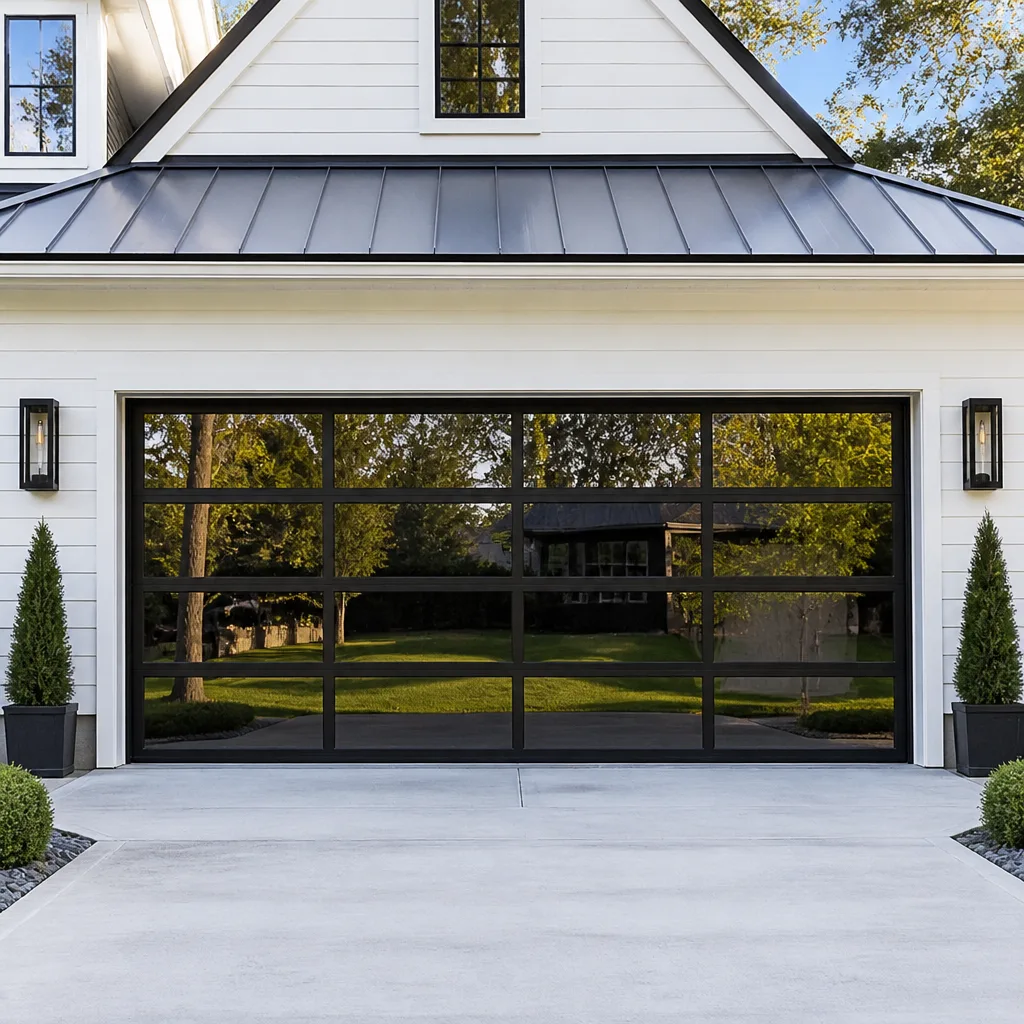 Full-view glass
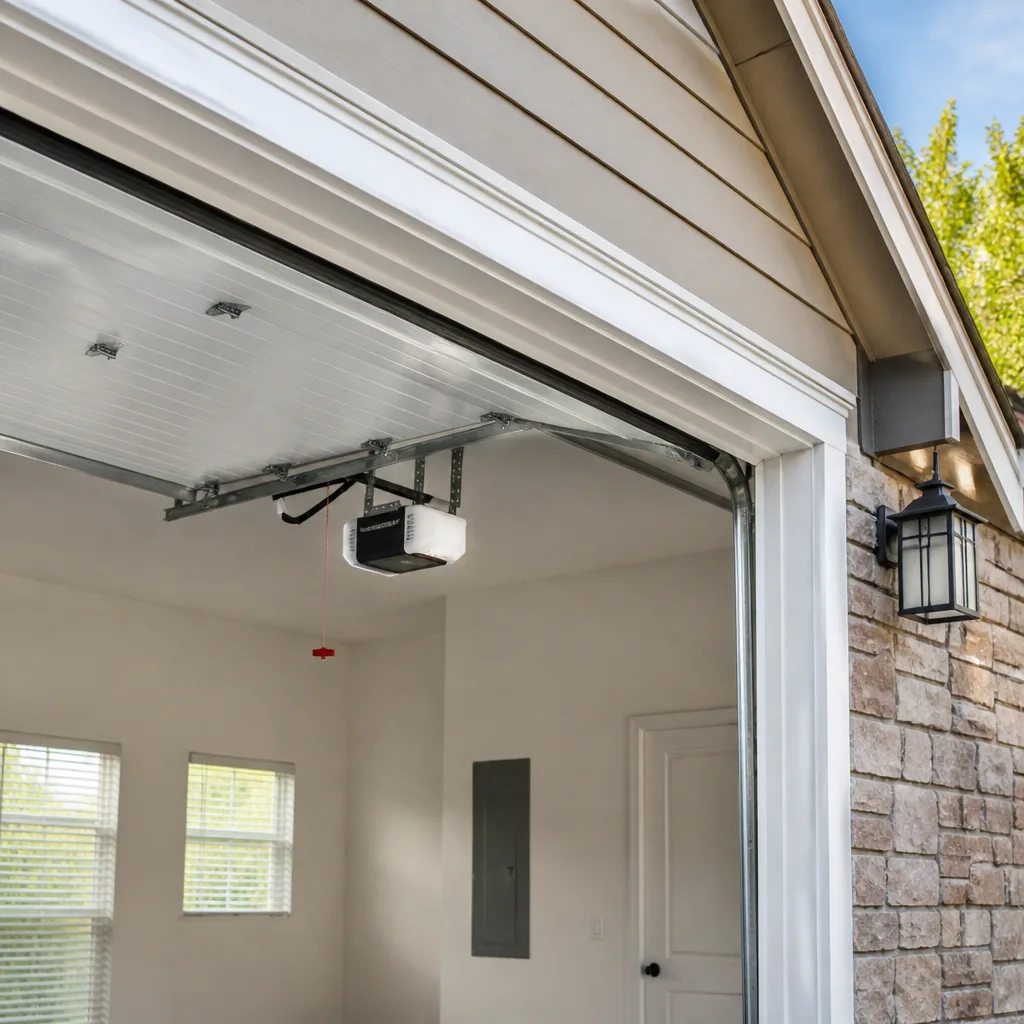 LiftMaster openers
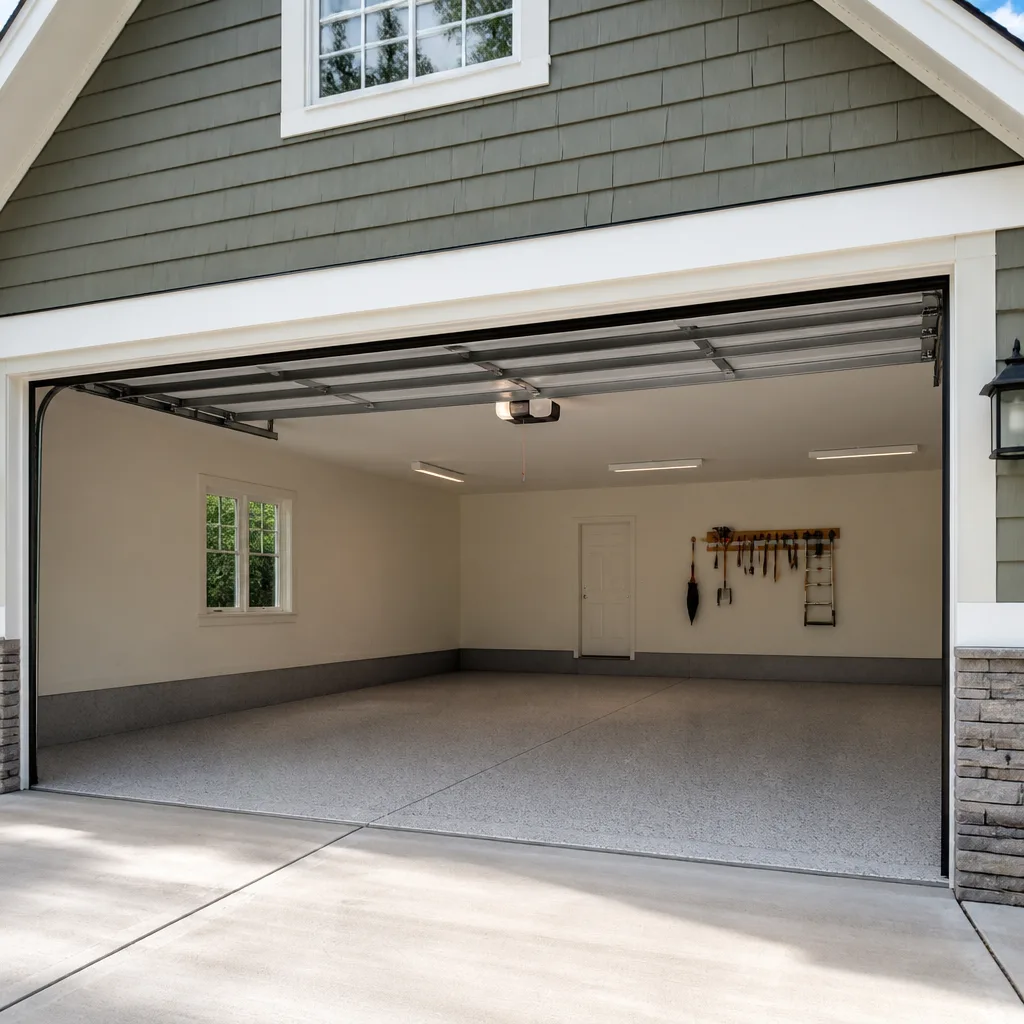 Chamberlain openers
Full 25-point door and opener safety check with every visit - springs, cables, rollers, tracks, and your LiftMaster or Chamberlain opener included
You get a price before we start. It does not change when the pro arrives.
Get your free estimateGarage Door Repair Troubleshooting in Jamaica: Common Problems and How to Fix Them
The most expensive garage door repair is often the second one. When a door starts grinding, sticking, or refusing to close, the instinct is to adjust whatever looks loose or spray whatever looks rusty. That guesswork costs money because the symptom rarely points at the actual broken part. A door that won’t close isn’t automatically a sensor problem. A grinding noise isn’t automatically a failing opener. In this guide, we’ll walk you through troubleshooting by system instead of by symptom, show you what you can safely check yourself, and flag the conditions around Jamaica, NY that speed up specific failures. You’ll finish knowing how to trace the source before spending a dollar.
Quick Answer
Garage door troubleshooting in Jamaica starts with matching the symptom to a system: opener, springs, tracks, or cables. Doors that won’t close are usually a sensor alignment or travel-limit issue, noisy doors are usually rollers or a dry torsion spring, and crooked or slow doors point at a cable or spring that’s failed. Springs and cables are dangerous and belong to a technician; rollers, sensor eyes, and the force setting are the few things you can safely adjust yourself.
Styles & brands we work with
- Raised-panel steel
- Carriage house
- Modern flush
- Full-view glass
- LiftMaster openers
- Chamberlain openers
Table of Contents
- Start With the Symptom, Not the Part: A Diagnostic Decision Tree
- The Door Won’t Close: Sensor, Limit, or Something Else?
- The Door Won’t Open: Opener, Spring, or Cable?
- The Door Is Noisy: What the Sound Tells You
- Crooked or Slow Doors: Tracking the Real Cause
- How Jamaica Conditions Accelerate Specific Failures
- Three Things You Can Safely Adjust Yourself
- When to Call a Professional
Start With the Symptom, Not the Part: A Diagnostic Decision Tree
Every garage door problem in Jamaica falls into one of five symptom categories. Trace the symptom first, then the part. That order keeps you from replacing a healthy opener because a broken spring was making it strain.
- Won’t open. Dead opener, hung door, or a snapped spring. Test the manual release first to separate the door from the motor.
- Won’t close. Safety sensor misalignment, a travel limit that’s drifted, or an obstruction the sensor keeps reading.
- Noisy. Worn rollers, a dry torsion spring, or loose track bolts. Grinding that starts at the top of travel often points at the opener gear.
- Slow or jerky. A spring that’s lost tension, a binding track, or an opener working harder than it should.
- Crooked or off-balance. A stretched or broken cable on one side, or a spring pair that’s out of sync.
Here’s the piece most homeowners skip: run the door by hand. Disconnect the opener with the release cord, then lift the door halfway and let go. A balanced door stays roughly where you put it. A door that slams down has a spring problem. A door you can barely lift by hand has a tension or track problem. That one check tells you whether you’re looking at the opener or the door itself, and it’s the first thing any experienced technician does when you call a Jamaica Garage Door Repair specialist.
The Door Won’t Close: Sensor, Limit, or Something Else?
A door that opens fine but stops or reverses on the way down is almost always the safety sensor circuit, not the opener motor. The sensors are the two small eyes at the bottom of the track, one on each side. When they lose sight of each other, the opener refuses to close the door as a safety default.
Start with the visible check:
- Look for a blinking light on either sensor. A steady light usually means aligned and powered; a blinking or dark light points at misalignment, a loose wire, or a lens covered in dust.
- Wipe both lenses. Street dust from busy roads settles on sensor glass faster than most people realize.
- Check that nothing has shifted at the base of the track. A bumped sensor bracket is the most common cause, and a light nudge back into line often solves it.
If the sensors are clean, aligned, and still the door reverses, the problem may be the travel limit or force setting that’s drifted. Some openers, including many Genie and LiftMaster models, let you adjust these from the motor head, but do it in small increments and test between each change. If the door still reverses without obstruction, the door itself may be binding in the track, which trips the opener’s force safety. At that point you’re past troubleshooting and into garage door opener repair territory, because the opener is correctly reporting a problem it didn’t cause.
The Door Won’t Open: Opener, Spring, or Cable?
Three different failures all look identical from the driver’s seat: the door won’t go up. The manual release check separates them in about ten seconds.
Pull the release cord and try lifting the door by hand.
- It lifts easily but the opener won’t run it. The door is fine. The trouble is in the opener: a dead motor, a stripped gear, a remote or wall control issue, or a power problem.
- It won’t budge, or it’s far heavier than it should be. You’re dealing with a torsion spring that’s snapped or lost tension. Do not force it. Springs store enormous energy and are the single most dangerous component on the door.
- It lifts unevenly, one side higher than the other. A cable has jumped its drum or snapped on one side. Stop and call someone.
In our experience across Jamaica, spring failures account for a large share of “door won’t open” calls, and they’re the case where DIY attempts go wrong fastest. A torsion spring under load can release violently if handled without the right winding bars and technique, and we’ve seen injuries from exactly that. A dedicated spring repair handled by trained technicians isn’t an upsell; it’s the difference between a fixed door and an ER visit. If you hear a loud bang from the garage followed by a door that won’t lift, assume a spring and don’t touch it.
The Door Is Noisy: What the Sound Tells You
Noise is the earliest warning a garage door gives you, and the type of sound narrows down the part. Listen closely before you spray anything.
- Squealing or high-pitched scraping. Metal-on-metal friction, usually dry rollers or a torsion spring that needs lubricant. This is the one noise that’s genuinely preventive, and a silicone-based garage door lubricant on the spring and hinges quiets it quickly.
- Grinding that starts at the top of travel. Often the opener’s internal gear, especially on older units. If the grinding comes from the motor head rather than the door, the opener is the source.
- Rattling or banging. Loose track bolts, hinge screws, or roller stems. A quick tighten with a socket wrench handles most of it, provided the hardware isn’t stripped.
- A rhythmic thumping. A flat spot on a steel roller or a bent hinge. Rollers are cheap, and replacing worn nylon rollers with new ones is one of the higher-value fixes on a door.
What noise doesn’t tell you is the condition of the spring’s tension or the cable’s integrity. A door can run quietly with a spring that’s weeks from failing. That’s why an annual hand-check of balance matters as much as listening for squeaks.
Crooked or Slow Doors: Tracking the Real Cause
A door that rises at an angle or takes noticeably longer than it used to has a mechanical problem, not an opener problem. Two systems cause this, and they’re easy to confuse.
Track alignment. The vertical and horizontal tracks must be parallel and plumb. A bent section of track, often from a car bumper or a bike leaning against it, forces the door to bind. Look down each track from the floor: you should see a clean straight line with no kinks. A small dent near the bottom is a common culprit in tight Jamaica driveways and narrow garages. Tracks that are badly bent need replacing rather than bending back, because a reshaped track rarely runs true.
Cable and spring tension. If one cable is slack or the spring pair is out of balance, the door lifts unevenly. This is common on older doors running original equipment from Clopay or Wayne Dalton units that have never had their cables checked. Cables under tension are dangerous to handle, and a snapped cable can whip with serious force. Slow doors that aren’t track-related nearly always trace back to a spring losing its lift, which is a technician’s job.
One concrete local factor: temperature swings. Jamaica’s summers push doors through wide temperature ranges, and metal expands and contracts with them. A door that runs fine in mild weather and drags in the heat or the cold is showing you a tension problem that a slight adjustment can fix before it becomes a failure. If it’s dragging year-round, it’s already a mechanical fault.
How Jamaica Conditions Accelerate Specific Failures
The conditions around Jamaica, NY, push certain failure modes faster than others. Knowing which ones matter helps you check the right parts at the right time.
- Humidity. The area sits in a humid climate for much of the year. That humidity attacks steel hinges, roller stems, and the torsion spring first. Rust on the spring coils is a real indicator; a spring that’s visibly corroded is closer to snapping than a clean one.
- Temperature swings. Hot summers and cold winters stress the spring every season, and that cycling is what eventually breaks a torsion spring rather than any single event. It’s the normal wear-out path, not a defect.
- Street-level vibration. Jamaica’s busy corridors send steady low-level vibration through foundations and garage slabs. Over time that vibration loosens track bolts, hinge screws, and sensor brackets. That’s why a door that needed no attention for a year suddenly shifts on its own – it’s the hardware working loose, not the door failing.
- Road dust. Dust from heavy traffic settles on sensor lenses and track surfaces. A quarterly wipe-down of the sensor eyes and a clean of the tracks prevents a whole category of phantom “won’t close” problems.
None of this means your door is doomed. It means the check sequence for a Jamaica home should prioritize the spring’s condition, the tightness of the track hardware, and the cleanliness of the sensor eyes. When the opener needs attention, we work on the brand you actually have – Genie, LiftMaster, Chamberlain, Craftsman, and the rest of the major systems – so the technician isn’t learning your equipment on the job.
Three Things You Can Safely Adjust Yourself
Most garage door advice splits into “call a pro” and “do anything you like,” and that’s unhelpful. Here’s the honest dividing line. These three adjustments are safe for a careful homeowner:
- Sensor alignment. Loosen the sensor bracket slightly, aim the eye so its light is steady, and tighten. Both lenses should face each other squarely.
- Lubrication. Apply a garage door lubricant to the torsion spring, hinges, and roller stems. Keep it off the tracks themselves – grease on the track attracts grit and causes binding.
- Tightening visible hardware. Track bolts and hinge screws work loose from vibration. Snug them, but don’t overtighten, since stripped hardware is worse than loose.
Five things require a technician for safety reasons:
- Replacing a torsion or extension spring. Springs store enough energy to break bones when released improperly.
- Replacing or re-tensioning cables. Cables can whip and cut when they snap.
- Replacing a bottom bracket or cable drum. Both are under spring load even when the door is down.
- Straightening or replacing tracks. A crooked track can drop the door on the way down.
- Adjusting the opener’s force or limit beyond a small step. A mis-set force can let the door close on an object or person.
If you’re in doubt about where a problem sits, that doubt is the answer: call it in. Repairs are estimated and quoted before any work starts, so you’ll know the number before anyone touches the door.
Red Flags That Point at a Hidden Second Problem
The most costly repairs come from fixing the visible symptom while a second fault quietly gets worse underneath. Watch for these signals that there’s more going on than the obvious broken part.
- The door reverses intermittently, not always. An intermittent failure is often a wire that’s partially loose or a sensor that loses contact in heat, not a sensor that’s dead. If you adjust the sensor and it fixes it for a week, the real fault is still there.
- The opener runs but the door barely moves. A straining opener usually means the door’s balance is off. The motor is fine; it’s working against a spring problem. Replace the opener without fixing the balance and you’ll be back in the same place.
- A repaired spring keeps breaking. Repeat failures on a torsion spring point at a bent shaft, worn bearings, or cables that aren’t tracking on the drum. The spring was the messenger, not the cause.
- The door runs smoothly after a fix but is suddenly noisy a few weeks later. New rollers on old, worn tracks wear fast. The track is the secondary problem.
- An uneven door that gets worse over weeks. This is a cable problem progressing, not a temporary imbalance. Left alone, it can drop the door.
If you spot any of these, describe the whole picture when you call. A technician who knows the door is intermittent, slow, and has already been adjusted once will check the wiring and balance first rather than repeating the same fix. That’s the difference between a single repair and paying twice for the same diagnosis.
Common Mistakes to Avoid
- Replacing the opener for a door problem. New openers don’t fix binding tracks or sagging springs. Diagnose the door’s balance before blaming the motor.
- Spraying lubricant on the tracks. The tracks must stay dry and clean so the rollers grip. Lubricant on tracks causes sliding and binding.
- Forcing a stuck door with the opener. If the door won’t lift by hand, burning out the opener’s motor is the likely outcome. Stop and call.
- Ignoring a loud bang from the garage. That’s a spring failure signal. Running the door after it happens strains cables and can damage the opener.
- Adjusting the force setting higher to force the door shut. This is the shortcut a homeowner takes to skip diagnosis, and it turns a safety mechanism into a hazard. Never do this.
- Bending a kinked track back into shape. Reshaped tracks rarely run true and wear out rollers quickly. Tracks should be replaced, not bent.
- Assuming a quiet door is a healthy door. Silent springs still break. Check balance annually and have the spring serviced when it’s visibly corroded.
See the difference
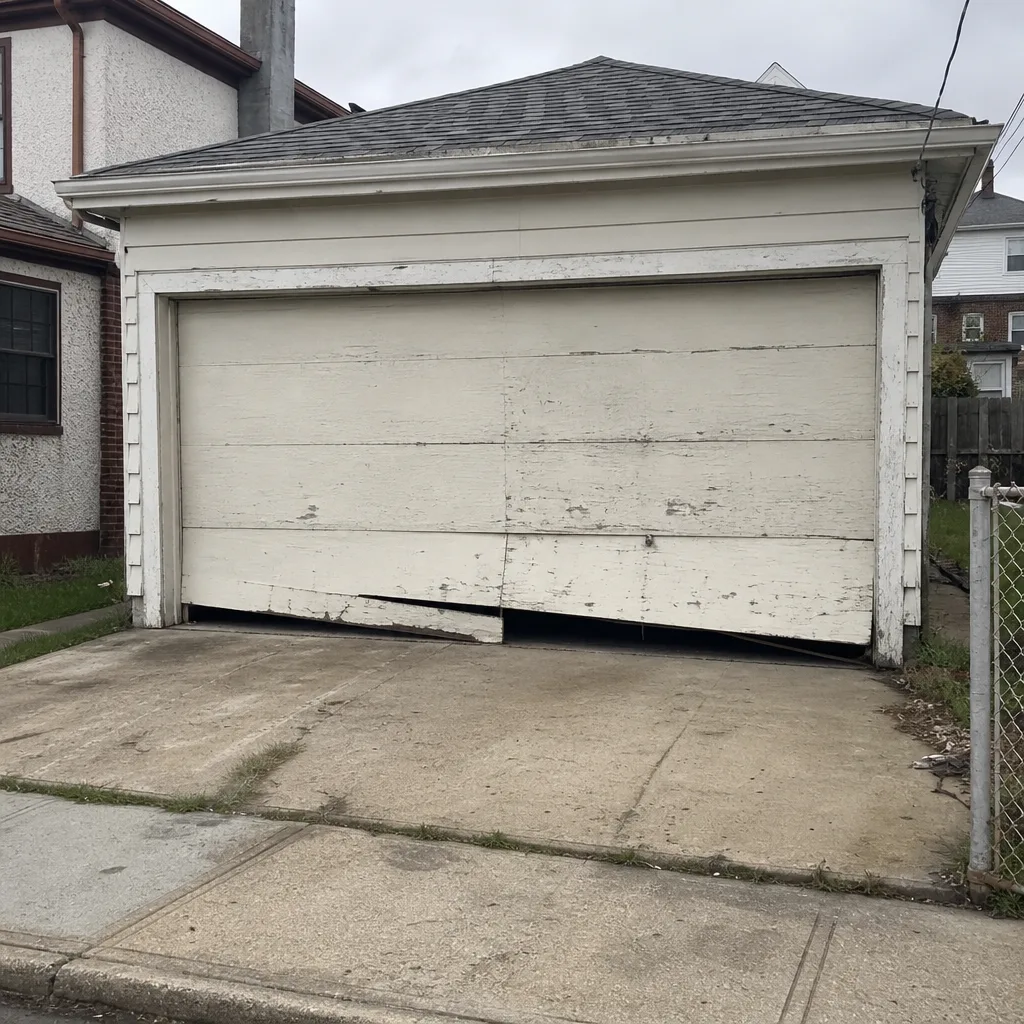 Before
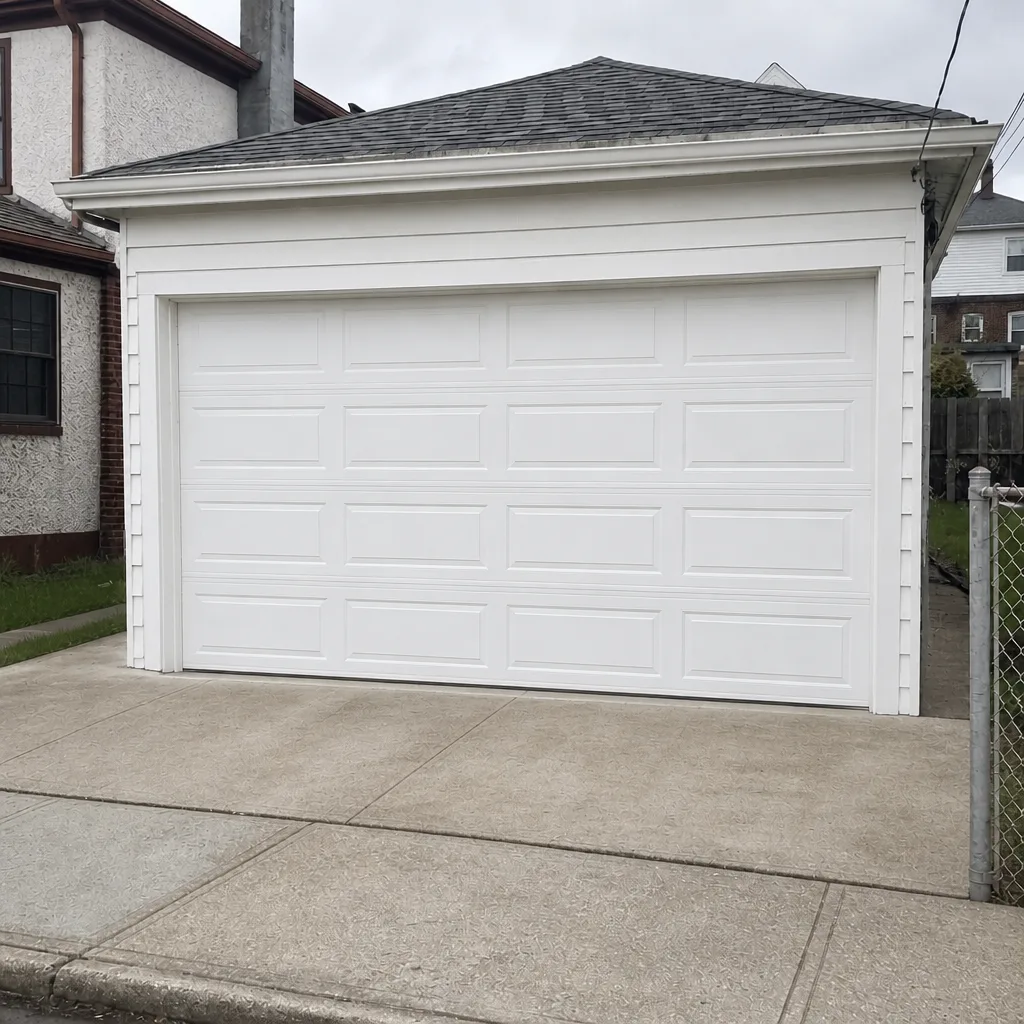 After
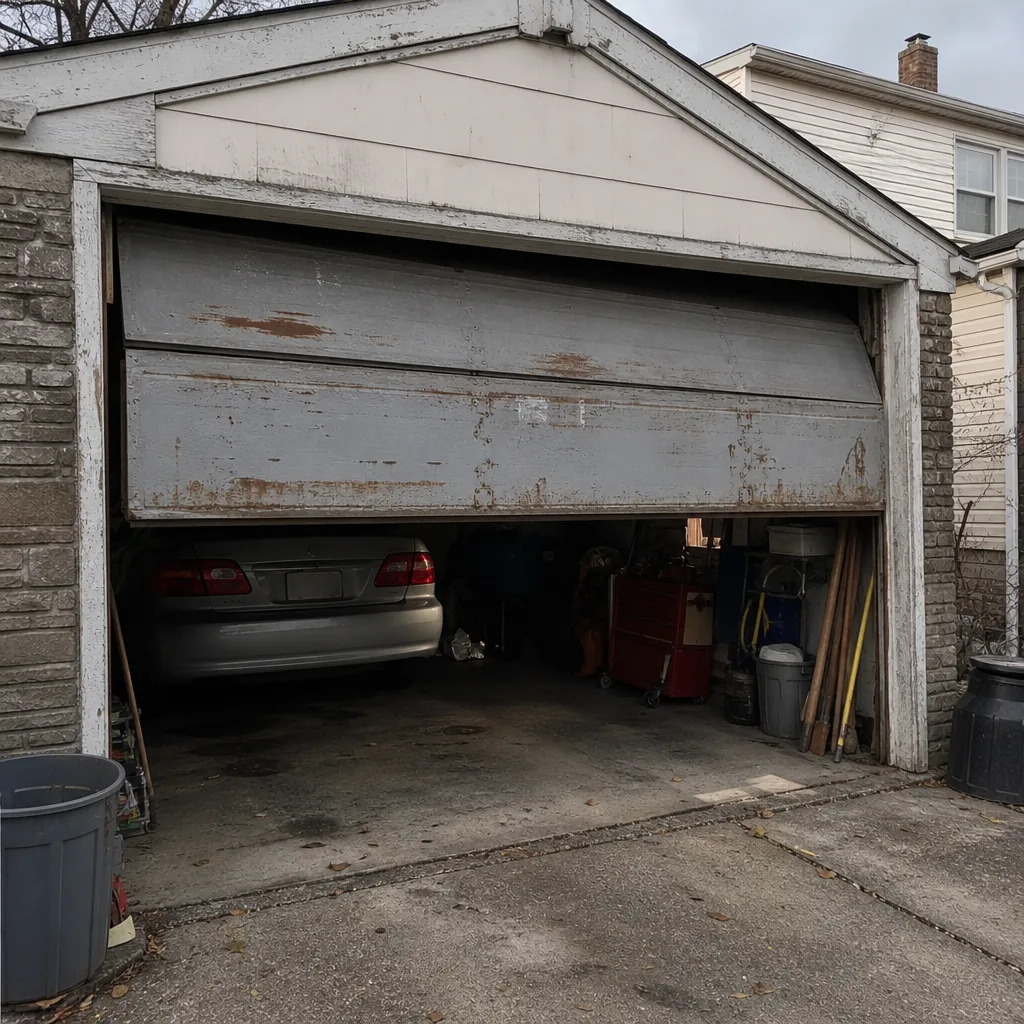 Before
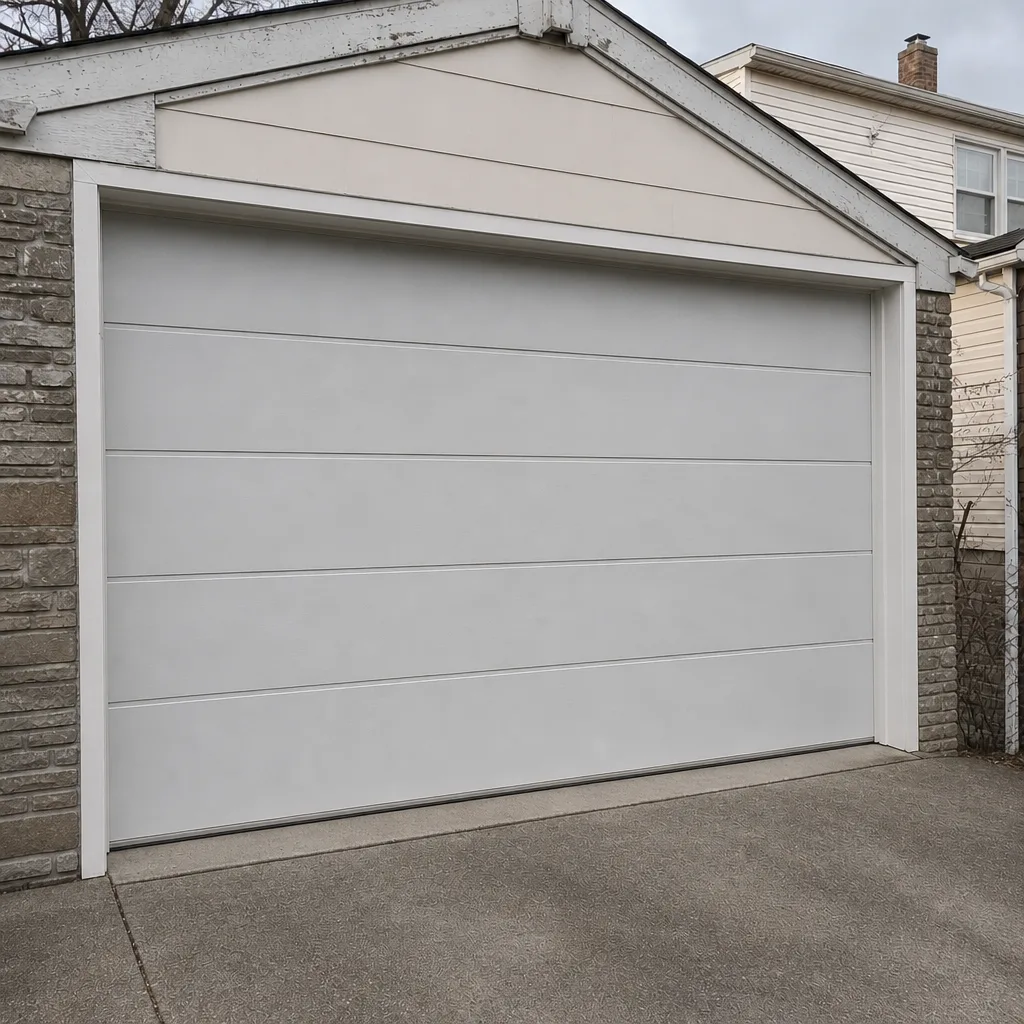 After
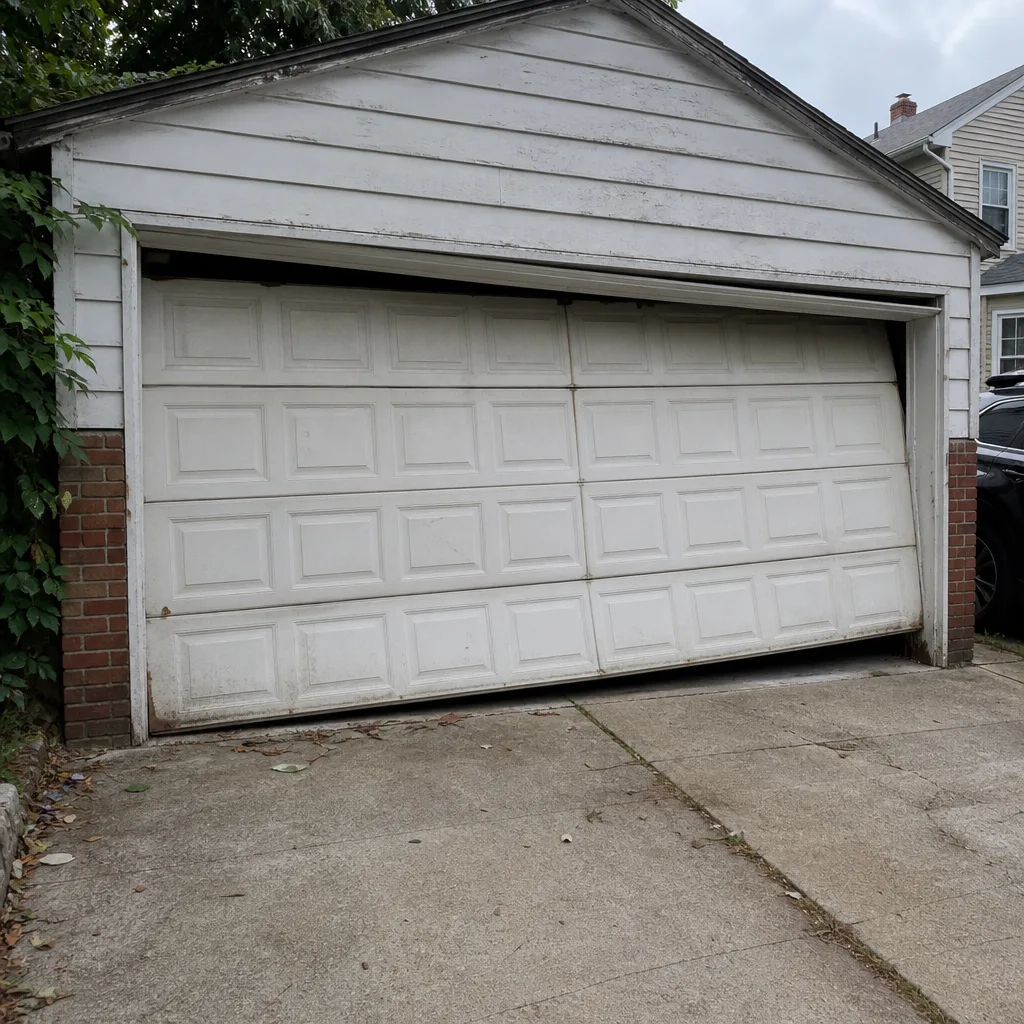 Before
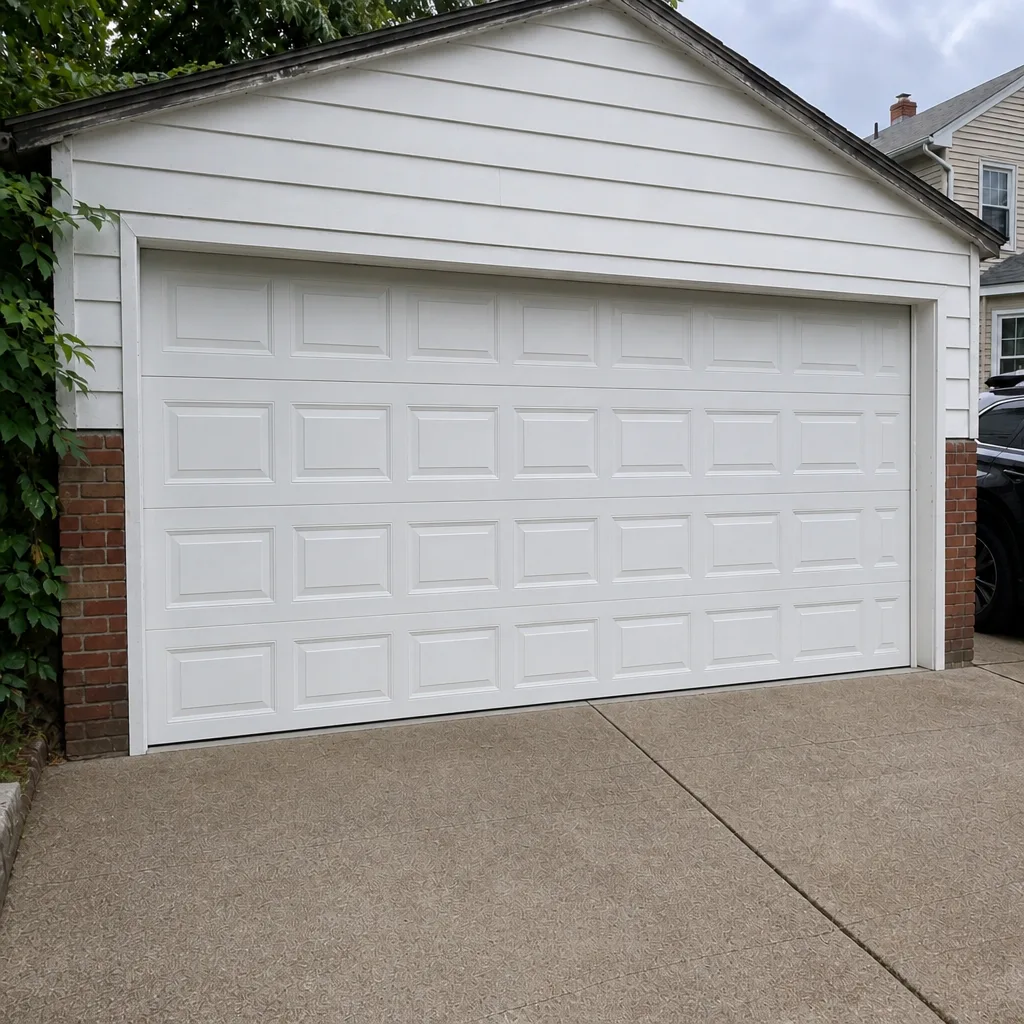 After
When to Call a Professional
Call a technician for anything involving springs, cables, bottom brackets, drums, or motor internals. Those components store energy or use voltage in ways that put a homeowner at real risk, and a trained professional treats a spring swap as routine because it’s what they do all day. Call if a door you can’t lift by hand, a loud bang from the garage, a door that won’t open by any method, a sensor you’ve cleaned and aligned three times without fixing the problem, or a door that’s visibly uneven and getting worse. For situations where the door traps a car or leaves the home unsecured, we offer emergency garage door service beyond standard hours. If you’re not sure whether your issue is urgent, describe it when you call and we’ll tell you. Jamaica Garage Door Repair offers free estimates in Jamaica – call (877) 792-6197. Our technicians have up to 12 years of experience, and every repair is quoted and agreed before any work starts. When the door is past repair, a proper garage door installation is the right call, and we handle that too.
Frequently Asked Questions
The most common cause is safety sensor misalignment or dirty lenses, followed by a travel limit that’s drifted. The sensors sit at the bottom of the track and lose sight of each other easily; a bumped bracket or road dust is often all it takes. Clean and realign both eyes, then test. If the door still reverses, the fault is elsewhere and worth a professional look.
Disconnect the opener using the manual release cord and lift the door by hand. If it lifts easily and stays put, your opener is the problem. If it’s too heavy to lift or slams down when released, the springs have lost tension. In our experience, most “opener broken” calls on a heavy door are actually spring failures. Don’t force a heavy door up by hand beyond a test lift.
No. Torsion springs store enough energy that improper handling can cause serious injury, and it’s the most dangerous repair on a garage door. Our spring repair is handled by trained technicians with the right equipment, and we recommend you don’t attempt it. Call (877) 792-6197 for a quote – estimates are free.
A slow door usually indicates a mechanical fault, not an opener setting. A spring that’s lost tension, a binding track, or a cable that’s dragging will all slow the door down, and the opener is compensating by working harder. Have the door’s balance checked before replacing anything on the motor side.
Yes. Humid conditions accelerate rust on hinges, roller stems, and torsion springs, and rust is a real indicator that a spring is closer to failing. Regular lubrication and a quick visual check for corrosion catch most of it early. Keeping track hardware tight matters too, since street vibration loosens bolts over time.
Call for emergency service if the door traps your car, leaves the home unsecured, or has a snapped spring or cable. We offer emergency garage door service beyond standard hours for exactly those situations. For routine noise, slow operation, or sensor issues, a standard appointment is fine. Either way, call (877) 792-6197 and we’ll help you decide.
The Bottom Line
Garage door repair costs go up when the wrong part gets replaced first. Troubleshoot by system: test the door by hand to separate opener problems from door problems, check sensors before you suspect the motor, and treat any noise or imbalance as a lead worth tracing. You can safely handle sensors, lubrication, and loose hardware; springs, cables, bottom brackets, and force settings need a technician. Jamaica’s humidity, temperature swings, and street vibration each speed up a predictable set of failures, so check the spring for corrosion, keep the sensor eyes clean, and tighten hardware when it shifts. Fix the actual source once, and the door stays on track. When you want it diagnosed properly, call Jamaica Garage Door Repair at (877) 792-6197 for a free estimate.
Written by the team at Jamaica Garage Door Repair.